
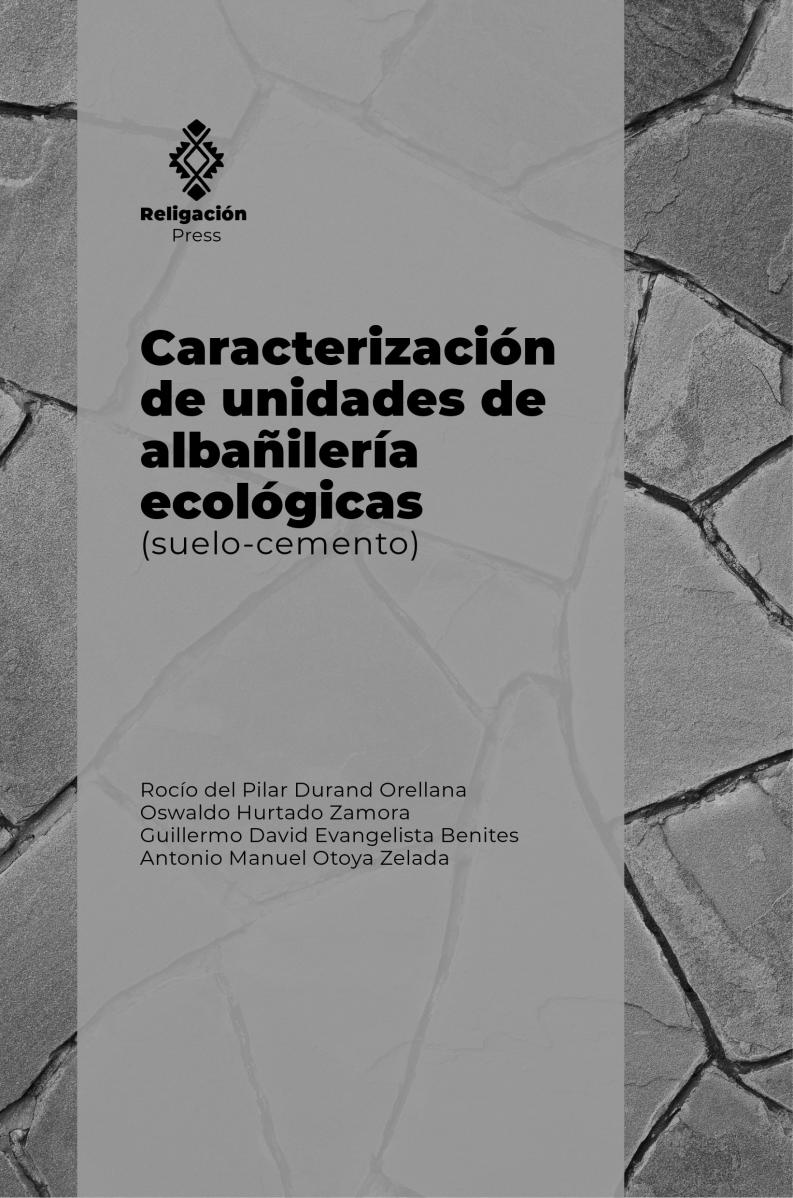
Characterization of ecological masonry units (soil-cement)
Keywords:
Environment; Construction; Compression resistance.Synopsis
In the current globalized world of construction, the need arises to create environmentally sustainable materials. In the present study, ecological masonry units were manufactured with two components, soil and cement, to then be subjected to experimental tests under the rigor of current Peruvian technical standards in order to obtain their physical-mechanical properties. The results were evaluated in reference to the NTP E-070, they showed a compressive strength that o fan artisanal clay brick. These results provide a good reference so that these masonry units can be made and used in areas where adobe has been used since they have demonstrated better performance in terms of resistance and their manufacturing process is similar to that carried out with adobe. The National Seismological Center (CENSIS) informs us of the seismic reports in our country that demonstrate important seismic activity because we are located in a tectonically very dynamic area; Therefore, this type of ecological materials meets the technical requirement and at the same time contributes to the sustainability of the environment for the benefit of the general population.
Downloads
Download data is not yet available.
References
Bowles. J. E. (1980). Manual de Laboratorio de Suelos en Ingeniería Civil. McGraw Hill.
Cardenas, E., y Deza, M. (2006). Influencia de la dosificación de tierra de diatomea y de la temperatura de cocción sobre el módulo de rotura, resistencia a la compresión, densidad, absorción de agua, en ladrillos ecológicos de construcción [Tesis de pregrado, Universidad Nacional de Trujillo].
Durand Orellana, R. (2015). Estudio experimental de unidades de albañilería fabricadas con suelo-cemento como alternativa para la construcción sostenible [Tesis doctorado, Universidad Nacional de Trujillo].
Flin, T. (1991). Materiales para Ingeniería y sus Aplicaciones. McGraw Hill
Gallegos Casabonne, H .C. (2005). Unidad de la albañilería y Propiedades de albañilería simple. En P. U. Católica (ed.). Albañilería estructural (pp. 75 -165, 199 – 259). Pontifica Universidad Católica.
Ministerio de Vivienda, Construcción y Saneamiento, y SENCICO. (2006). Reglamento Nacional de Construcciones. Norma E.070 “Albañilería”.
Smith, W. (1998). Fundamentos de la Ciencia e Ingeniería de Materiales. McGraw Hill
Tomansini, G., y Olivero, F. (2006). Diseño racional de Ladrillos de Suelo-Cemento y Análisis para su utilización en viviendas económicas de interés social. http://www.frra.utn.edu.ar/secretarias/cyt/cientifico_tecnico/ladrillos.pdf
Vara Horna, A. (2008). Cómo hacer una tesis en ciencias empresariales. USMP.
Viviendas Económicas. (1999). La opción del suelo-cemento. XI Seminario de Viviendas y Urbanismo. Unión Nacional de Arquitectos e Ingenieros de la Construcción de Cuba.
Published
December 2, 2024
Series
Copyright (c) 2024 Rocío del Pilar Durand Orellana, Oswaldo Hurtado Zamora, Guillermo David Evangelista Benites, Antonio Manuel Otoya Zelada

Details about the available publication format: PDF
PDF
ISBN-13 (15)
978-9942-664-59-4
Publication date (01)
2024-12-02
Details about the available publication format: EPUB
EPUB
ISBN-13 (15)
978-9942-664-59-4
Publication date (01)
2024-12-02