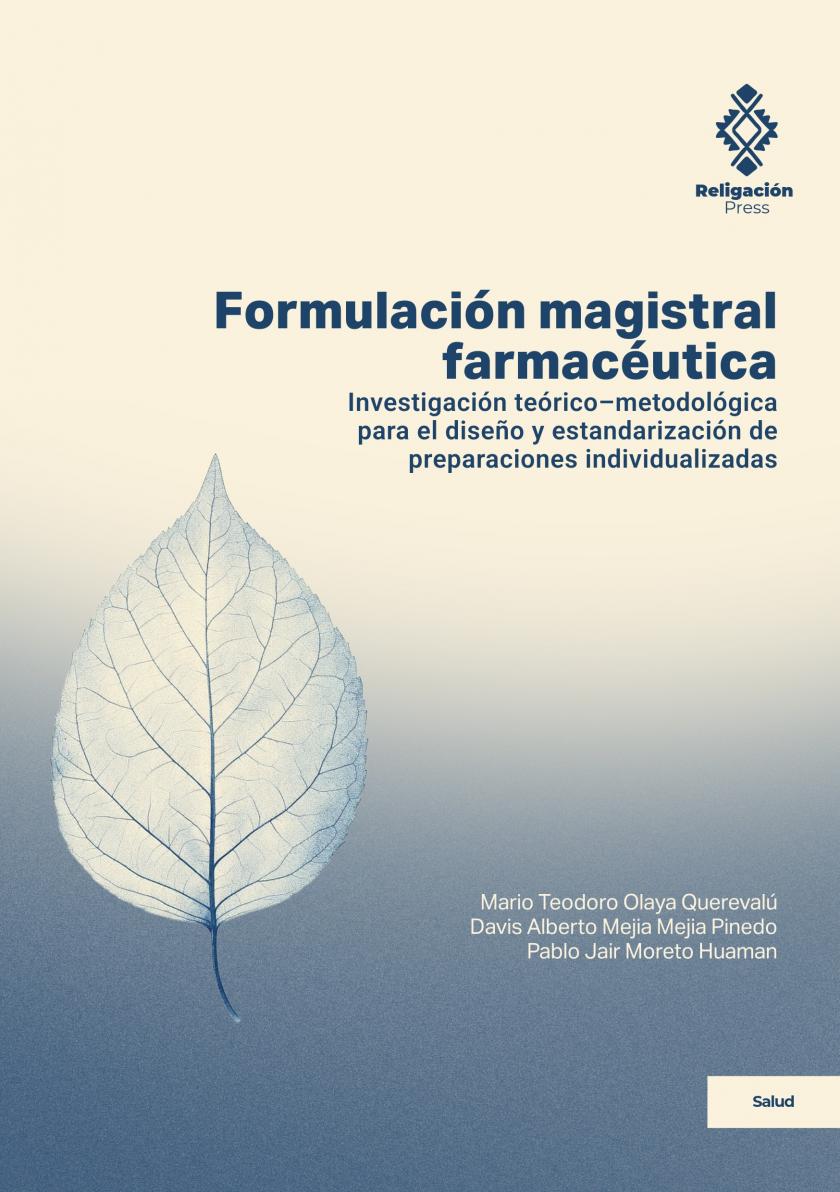
Formulación magistral farmacéutica. Investigación teórico–metodológica para el diseño y estandarización de preparaciones individualizadas
Palabras clave:
Formulación magistral, estandarización, farmacotecnia, control de calidad, seguridad del paciente.Sinopsis
La formulación magistral farmacéutica es una práctica esencial para atender necesidades terapéuticas no cubiertas por medicamentos industrializados. Sin embargo, carece de una sistematización metodológica que garantice su reproducibilidad y fundamentación científica. Esta obra propone un modelo estructurado para el diseño y estandarización de preparaciones magistrales, basado en principios farmacotécnicos, fisicoquímicos y normativos. A través de una investigación documental cualitativa, se integran criterios de selección de ingredientes, control de calidad y estabilidad, aplicables a formulaciones líquidas, sólidas y semisólidas. El libro contribuye al fortalecimiento de la práctica farmacéutica, mejorando la calidad y seguridad de las preparaciones individualizadas.
Descargas
Los datos de descargas todavía no están disponibles.
Citas
Abarca, E., Hernando, P., & Gilaberte, Y. (2020). Revisión de las fórmulas magistrales de mayor interés en dermatología pediátrica. Actas Dermo-Sifiliográficas, 112, 736-745.
Agencia Española de Medicamentos y Productos Sanitarios. (2023, 27 de febrero). Farmacopea y formulación magistral. Gobierno de España. https://n9.cl/qq2e1
Aiken, L. (1985). Three coefficients for analyzing the reliability and validity of ratings. Educational and Psychological Measurement, 45(1), 131–142. https://doi.org/10.1177/0013164485451012
Alessandrini, E., Gonakova, M., Batchelor, H., Gizurarson, S., Iurian, S., Klein, S., & Tuleu, C. (2023). Colour of medicines and children’s acceptability? A systematic literature review of children’s perceptions about colours of oral dosage forms. Pharmaceutics 15(7).
Alkathiri, F., Eid, O., Altuwaijri, N., Alfaraj, R., Eltahir, E., Alsabbagh, H., & Altoum, G. (2025). Stability assessment of furosemide oral suspension in hospital extemporaneous preparations. Pharmaceuticals, 18(7).
Allen, L. V., Popovich, N. G., & Ansel, H. C. (2014). Ansel’s pharmaceutical calculations. Lippincott Williams & Wilkins.
Amin, M., Nørgaard, L., Cavaco, A., Witry, M., Hillman, L., Cernasev, A., & Desselle, S. (2020). Establishing trustworthiness and authenticity in qualitative pharmacy research. Research in Social & Administrative Pharmacy, 16(10), 1472–1482. https://doi.org/10.1016/j.sapharm.2020.02.005
Annereau, M., Secretan, P.-H., & Do, B. (2026). A risk-based, QTPP-driven framework for semi-solid extrusion 3D printing of personalized medicines: Integrating hospital compounding and clinical trial regulation. European Journal of Pharmaceutical Sciences 216.
Aref, H., Witry, M., Olufemi-Yusuf, D., & Guirguis, L. (2021). Ensuring quality qualitative research reporting in community pharmacy: A systematic literature review. International Journal of Pharmacy Practice, 29(5), 416–427.
Arias-Odón, F. (2023). Investigación documental, investigación bibliométrica y revisiones sistemáticas. Revista electrónica de Humanidades, Educación y Comunicación Social, 31(22), 9-28.
ASHP. (2022). The pharmacist guide to assigning a beyond use date to a compounded sterile or nonsterile preparation. ASHP.
Asociación Española de Pediatría. (2020). Pediamécum: Clonidina. Comité de Medicamentos, AEP.
Asociación Nacional de Farmacéuticos Magistrales. (2021). Guía magistral hospitalaria. São Paulo, Brasil.
Aulton, M. E., & Taylor, K. M. G. (2018). Aulton’s pharmaceutics: The design and manufacture of medicines. Elsevier.
Ayyoubi, S., Holst, A., Maduro, J., Van der Kuy, P., Van Ee, R., Van de Velde, D., ... Ruijgrok, E. (2025). Benchmarking pharmaceutical quality and manufacturing costs of 3D printing against conventional compounding methods for personalization of medicine. European Journal of Pharmaceutical Sciences 212.
Bachawala, S., & Gonzalez, M. (2023). Development of mechanistic reduced order models (ROMs) for glidant and lubricant effects in continuous manufacturing of pharmaceutical solid-dosage forms. ESCAPE, 51, 1129–1134.
Badillo-García, M., & Arias, J. (2020). Primeros estudios de preformulación en el desarrollo de una suspensión farmacéutica de micropartículas de praziquantel destinada a la vía de administración oral. Ars Pharmaceutica, 60(4).
Baratta, F., Zingarelli, C., Fanton, F., Lamy, E., Di Lascio, G., & Brusa, P. (2025). Metronidazole suspension for paediatric use in developing countries: Formulation, quality, and stability. Pharmaceutics 17(6).
Bardin, L. (2002). Análisis de contenido. Akal SA.
Barnes, T. M., Mijaljica, D., Townley, J. P., Spada, F., & Harrison, I. P. (2021). Vehicles for drug delivery and cosmetic moisturizers: Review and comparison. Pharmaceutics, 13(12).
Baser, K., Erdag, E., & Haskologlu, I. (2025). Menthol: A comprehensive review of its pharmacological properties and therapeutic applications. Sage Journals Home, 20(11).
Belayneh, A., & Tessema, Z. (2021). A systematic review of the stability of extemporaneous pediatric oral formulations. ScientificWorldJournal, 2021.
Bello, W., Pezzatti, J., Rudaz, S., & Sadeghipour, F. (2024). Study of leachable compounds in hospital pharmacy-compounded prefilled syringes, infusion bags and vials. Journal of Pharmaceutical Sciences, 113(11), 3227–3237.
Bernardo, A. R., Faccin, T., de Oliveira, M. G., Castro Hoshino, L. V., Baesso, M. L., Pangoni, F. B., & Bruschi, M. L. (2024). The impact of isopropanol and carbomer type on physicochemical characteristics of bioadhesive thermoresponsive platforms for eprinomectin delivery. Journal of Drug Delivery Science and Technology, 10(12).
Bharate, S. S., Bharate, S. B., & Bajaj, A. N. (2016). Interactions and incompatibilities of pharmaceutical excipients with active pharmaceutical ingredients: A comprehensive review. Journal of Excipients and Food Chemicals, 1(3), 11–31.
Bobillot, M., Delannoy, V., Trouillard, A., Kinowski, J., Sanchez-Ballester, N., & Soulairol, I. (2024). Potentially harmful excipients: State of the art for oral liquid forms used in neonatology and pediatrics units. Pharmaceutics, 16(1).
Boletín Oficial del Estado. (2001, 23 de febrero). Real Decreto 175/2001. Agencia Estatal Boletín Oficial del Estado. https://n9.cl/lrefhl
Boudoukhani, M., Yahoum, M. M., Ezzroug, K., Toumi, S., Lefnaoui, S., Moulai-Mostefa, N., ... Zhang, J. (2024). Formulation and characterization of double emulsions W/O/W stabilized by two natural polymers with two manufacturing processes (Comparative study). ChemEngineering, 8(2).
Bouwhuis, N., Jacobs, B. A. W., & Kemper, M. (2023). Product development and quality of pharmacy compounded chenodeoxycholic acid capsules for Dutch cerebrotendinous xanthomatosis patients. Frontiers in Pharmacology, 14.
Bowen, G. A. (2009). Document analysis as a qualitative research method. Emerald Insight, 9(2), 27–40.
Braun, V., & Clarke, V. (2021). Thematic analysis: A practical guide. SAGE.
Brusac, E., Jeličić, M. L., Cvetnić, M., Amižić, K., Nigović, B., & Mornar, A. (2021). A comprehensive approach to compatibility testing using chromatographic, thermal and spectroscopic techniques: Evaluation of potential for a monolayer fixed-dose combination of 6-mercaptopurine and folic acid. Pharmaceuticals, 14(3).
Burande, A. S., Dhakare, S. R., Dondulkar, A. S., Gatkine, T. R., Bhagchandani, D. J., Sonule, M. S., & Prasad, S. (2024). A review on the role of co-processed excipients in tablet formulations. Hybrid Advances.
Campos Basterrechea, N., Hormigó Puertas, I., Pérez Parra, Z., Cuan Aguilar, Y., & Hernández Silva, J. (2023). Conocimientos básicos para la preparación y uso de fórmulas magistrales en oftalmología. Rev Cubana Oftalmol, 36(3).
Caritá, A. C., Kichou, H., Legrand, F.-X., Verger, A., Perse, X., Rapetti, L., ... Munnier, E. (2025). Improvement of the rheological properties and performance of liquid crystal emulsions: Influence of oil addition and/or high-frequency ultrasound treatment. International Journal of Pharmaceutics, 682.
Carter, B., Gibson, B., Peak, M., Blake, L., & Bracken, L. (2025). Children’s perspectives on the acceptability of medicine, how to assess acceptability and the development of the Theoretical Framework of Children’s Medicine Acceptability: A qualitative study. RPS Pharmacy and Pharmacology Reports 4(2).
Carvalho, M. J., Barbosa, J., Rosendo da Silva, M., Albano, H., & Teixeira, P. (2024). Impact of polysorbate 80 on the antimicrobial activity of oregano and thyme. Molecules, 30(1).
Cassano, R., Di Gioia, M. L., & Trombino, S. (2021). Gel-based materials for ophthalmic drug delivery. Gel, 7(3).
Cerda Gutiérrez, H. (2021). Los elementos de la investigación. Magisterio.
Cespedes Tupayachi, H. (2023). Situación actual de la formulación magistral y sus perspectivas de desarrollo en la ciudad del Cusco [Tesis de pregrado, Universidad Nacional de San Antonio Abad del Cusco].
Chachlioutaki, K., Li, X., Koltsakidis, S., Abdelhakim, H. E., Bouropoulos, N., Tzetzis, D., & Fatouros, D. G. (2025). How sugar types and fabrication methods affect palatability in paediatric-friendly oromucosal pullulan films of chlorpromazine hydrochloride. Carbohydrate Polymers, 348.
Chatzidopavlaki, P., Triantafyllopoulou, E., Pippa, N., Valsami, G., & Dallas, P. (2024). Recent advances in the technology of effervescent tablets: Lessons learned and future perspectives. RSC Pharmaceutics, 2(1), 8-18.
Colegio Oficial de Farmaceuticos de Valencia. (2025, 20 de marzo). Novedades en la formulación magistral de administración oral. https://n9.cl/bi2m7x
Comoglu, T., & Ozyilmaz, E. (2025). Pharmaceutical excipients in pediatric and geriatric drug formulations: Safety, efficacy, and regulatory perspectives. Pharmaceutical Development and Technology, 30(1), 1–9.
Consejo General de Colegios Farmacéuticos de España. (2025, 10 de diciembre). Documentación sobre formulación magistral. https://n9.cl/gpwf1
Consejo General de Colegios Farmacéuticos de España. (2025, 22 de diciembre). Código de Deontología de la Profesión Farmacéutica – 2023. https://n9.cl/bn06v
Czerniel, J., Gostyńska, A., Jańczak, J., & Stawny, M. (2023). A critical review of the novelties in the development of intravenous nanoemulsions. European Journal of Pharmaceutics and Biopharmaceutics, 191, 36-56.
De la Paz Mellado, V., & Lampert Grassi, M. (2023). Regulación del recetario magistral: Periodo de vida útil de los preparados magistrales. Biblioteca del Congreso Nacional de Chile.
Del Arco, J. (2002). Formulación magistral en pediatría. Sociedad Vasco-Navarra de Pediatría.
Desai, P. M., Liew, C. V., & Heng, P. W. S. (2016). Review of disintegrants and the disintegration phenomena. Journal of Pharmaceutical Sciences, 105(9), 2545–2555.
DIGEMID. (2018). Normas técnicas relacionadas con la preparación de fórmulas magistrales. Ministerio de Salud del Perú.
Dijkers, E., Polonini, H., & Ferreira, A. O. (2020). Always the right dose? Content uniformity in over 100 different formulations tested. International Journal of Pharmaceutical Compounding, 24(5), 408–412.
Divya, Joshi, S., Appukuttan, J., Chandrapala, J., & Majzoobi, M. (2025). Impact of conventional and advanced techniques on stability of natural food colourants. Foods, 14(18).
Dressman, J. B., & Reppas, C. (2000). In vitro-in vivo correlations for lipophilic, poorly water-soluble drugs. European Journal of Pharmaceutical Sciences, 11.
Dressman, J. B., & Reppas, C. (2017). In vitro–in vivo correlations for lipophilic, poorly water-soluble drugs. En Oral drug absorption: Prediction and assessment. Elsevier.
Dubois, L., Bouguergour, C., Paoli-Lombardo, R., Castera-Ducros, C., Jean, C., Fuchs, M., & Curti, C. (2025). Compounding and stability studies of liquid oral formulations of beta-blockers (bisoprolol, betaxolol, and nadolol) for paediatric patients. Journal of Pharmacy & Pharmaceutical Sciences, 28.
Escudero Sánchez, C. L., & Cortez Suárez, L. A. (2018). Técnicas y métodos cualitativos para la investigación científica. Universidad Técnica de Machala.
Espáriz de la Cruz, P. (2025). Comprehensive analysis of compounded prescription orders: Types of errors and variability among autonomous communities in Spain. Farmacia Comunitaria, 17(2), 48–59.
Esquirol-Caussa, J., Sanchez-aldeguer, J., & Santamaria, I. (2017). La revisión bibliográfica, base de la investigación. Financial Economics.
Esteban-Jiménez, Ó., & Hernández-Rodríguez, M. (2025). Drug shortages in family medicine practice. Atención Primaria.
Europena Medicine Agency. (2018). Information for the package leaflet regarding polysorbates used as excipients in medicinal products for human use. EMA.
Europena Medicine Agency. (2020). Guideline on the quality of water for pharmaceutical use. EMA.
Fadda, H., Weiler, H., Carvalho, M., Lee, Y., Dassouki, H., AbuBlan, R., & Tuleu, C. (2024). Pediatric oral extemporaneous preparations and practices: International Pharmaceutical Federation (FIP) global study. Air Uni Mi.
FDA. (2024). Control of nitrosamine impurities in human drugs: Guidance for industry. Center for Drug Evaluation and Research.
FDA. (2025). Q3E guideline for extractables and leachables. https://n9.cl/judyl
Fioramonti Calixto, G., Pestana, A. S., Costa Bezerra, A., Tavares Luiz, M., Lobato Duarte, J., Chorilli, M., & Franz-Montan, M. (2025). In vitro proof-of-concept study: Lidocaine and epinephrine co-loaded in a mucoadhesive liquid crystal precursor system for topical oral anesthesia. Pharmaceuticals, 18(8).
Freires, I. A., Denny, C., Benso, B., de Alencar, S. M., & Rosalen, P. L. (2015). Antibacterial activity of essential oils and their isolated constituents against cariogenic bacteria: A systematic review. Molecules, 20(4), 7329–7358.
Freisz, A., Dhifallah, I., Basle, Y., Jouannet, M., Chennell, P., Garrait, G., & Sautou, V. (2024). Development and characterization of novel fast-dissolving pentobarbital suppositories for pediatric procedural sedation and comparison with lipophilic formulations. European Journal of Pharmaceutics and Biopharmaceutics, 15(3).
Frey, K. B., Baker, H. C., Purcell, D. K., Lewis, A. R., & Engers, D. A. (2023). Use of resonant acoustic mixing technology for ultra-low-dose blending in a single-step mixing process. Pharmaceutical Research, 41(1), 165–183.
Gabrič, A., Hodnik, Ž., & Pajk, S. (2022). Oxidation of drugs during drug product development: Problems and solutions. Pharmaceutics, 14(2).
Gabriel Perez, Y. M., & Quispe Noa, M. A. (2018). Perfil del Químico Farmacéutico sobre las formulaciones magistrales que se preparan en el Hospital Regional Docente Materno Infantil El Carmen [Tesis de pregrado, Universidad Privada de Huancayo Franklin Roosevelt].
Gershanik, J., Boecler, B., Ensley, H., McCloskey, S., & George, W. (1982). The gasping syndrome and benzyl alcohol poisoning. New England Journal of Medicine, 307(22), 1384–1388.
Giannetti, M., Canale, V., Micheli, L., Fiori, M., Mazzuca, C., & Palleschi, A. (2023). An insight into the degradation processes of the anti-hypertensive drug furosemide. Molecules, 28(1).
Grim, J., Armogida, M., Kachroo, P., Siddiqui, K., Cavinato, M., & Araga, M. (2024). Bioequivalence of a new pediatric paracetamol oral suspension compared with a marketed formulation in healthy adults: A randomized, open-label study. Current Therapeutic Research, Clinical and Experimental, 100.
Hauber, B., Hand, M., Hancock, B., Zarrella, J., Harding, L., Ogden-Barker, M., & Watt, S. (2024). Patient acceptability and preferences for solid oral dosage form drug product attributes: A scoping review. Patient Preference and Adherence, 18, 1281–1297.
Hernández-Sampieri, R. (2018). Metodología de la investigación: las rutas cuantitativa, cualitativa y mixta. McGraw-Hill Interamericana.
Hoang, V. T., Cong, C. T., Tran, H. T., Nguyen, H. T., & Nguyen, T. T. (2021). Influence of fatty alcohol mixing ratios on physicochemical properties of stearyl–cetyl–polysorbate 60–water ternary system: Insights from experiments and computer simulations. Colloid and Polymer Science, 299(5), 1885–1900.
Hosny, K. M., Alkhalidi, H. M., Alharbi, W. S., Md, S., Sindi, A. M., Ali, S. A., & Kurakula, M. (2021). Recent trends in assessment of cellulose derivatives in designing novel and nanoparticulate-based drug delivery systems for improvement of oral health. Polymers, 14(1).
Iglesias-Sancho, M., Llambí-Mateos, F., & Salleras-Redonnet, M. (2020). Formulación magistral en patología de la mucosa oral. Actas Dermo-Sifiliográficas, 111(10), 822-828.
International Council For Harmonisation. (2025). Stability testing of drug substances and drug products Q1. ICH.
Islam, M. T., Rodríguez-Hornedo, N., Ciotti, S., & Ackermann, C. (2004). Rheological characterization of topical carbomer gels neutralized to different pH. Pharmaceutical Research, 21(7), 1192–1199.
ISMP. (2022). Guidelines for sterile compounding and the safe use of sterile compounding technology. ISMP.
Jain, S., & Shah, R. (2023). Drug-excipient compatibility study through a novel vial-in-vial experimental setup: A benchmark study. AAPS PharmSciTech, 24(5).
Jansook, P., Sigurdsson, H. H., Pilotaz, F., & Loftsson, T. (2024). Antimicrobial preservatives in cyclodextrin-containing drug formulations. Pharmaceutics, 16(12).
Jaspers, M., Tegel, F., Roelofs, T., Starsich, F., Song, Y., Meir, B., ... Dickhoff, B. (2024). Process intensification of pharmaceutical powder blending at commercial throughputs by utilizing semi-continuous mini-blending. International Journal of Pharmaceutics: X, 8.
Jin, X., Imran, M., & Mohammed, Y. (2022). Topical semisolid products—Understanding the impact of metamorphosis on skin penetration and physicochemical properties. Pharmaceutics, 14(11).
Johnson, J. L., Adkins, D., & Chauvin, S. (2020). A review of the quality indicators of rigor in qualitative research. American Journal of Pharmaceutical Education, 84(1).
Khan, A. (2015). The role of disintegrants in solid oral dosage manufacturing. World Journal of Pharmaceutical Research.
Kim, K.-S., Cho, H.-J., Din, F. U., Cho, J.-H., & Choi, H.-G. (2025). Surfactant–particle engineering hybrids: Emerging strategies for enhancing solubility and oral bioavailability of poorly water-soluble drugs. Pharmaceutics, 18(1).
Lalla, R. V., Sonis, S. T., & Peterson, D. E. (2009). Management of oral mucositis in patients with cancer. Dental Clinics of North America, 52(1).
Lamy, E., Orneto, C., Abdou Ali, O., Kireche, L., Mathias, F., Bouguergour, C., & Curti, C. (2025). Formulation, quality control and stability study of pediatric oral dextrose gel. Pharmaceuticals, 18(2).
Lara Garcia, R. J., Afonso Urich, J. L., Afonso Urich, A. C., Jeremi, D., & Khinast, J. G. (2025). Application of lactose co-processed excipients as an alternative for bridging pharmaceutical unit operations: Manufacturing an omeprazole tablet prototype via direct compression. Scientia Pharmaceutica, 93(2).
Lawshe, C. H. (1975). A quantitative approach to content validity. Personnel Psychology, 28(4), 563–575.
Lincoln, Y. S., & Guba, E. G. (1985). Naturalistic inquiry. Sage Publications.
López, M., Justo, A., & Santos, P. (2025). Excipientes de medicamentos: necesarios, pero no inocuos. Farmacéuticos Comunitarios, 17(4), 65-80.
Lozada, J. (2014). Investigación aplicada: Definición, propiedad intelectual e industria. CienciAmérica: Revista de divulgación científica de la Universidad Tecnológica Indoamérica, 3(1), 47-50.
Ludgero, M. (2024). Determination of the required hydrophilic-lipophilic balance for the development of emulsions containing turpentine oil. Research, Society and Development, 18(3).
Maher, S., Geoghegan, C., & Brayden, D. J. (2023). Safety of surfactant excipients in oral drug formulations. Advanced Drug Delivery Reviews, 202.
Makkad, S., Sheikh, M., Shende, S., & Jirvankar, P. (2025). Pharmaceutical excipients: Functions, selection criteria, and emerging trends. International Journal of Pharmaceutical Investigation, 15(2), 361–376.
Maler, V., Goetz, V., Tardieu, M., El Khalil, A., Alili, J., Meunier, P., & Labarthe, F. (2023). Aspartame and phenylketonuria: An analysis of the daily phenylalanine intake of aspartame-containing drugs marketed in France. Orphanet Journal of Rare Diseases, 18(1).
Malkawi, R., & Altahrawi, L. (2025). Excipients in pharmaceuticals: Mechanisms of hypersensitivity and the role of global pharmacovigilance. Saudi Pharmaceutical Journal, 33(4).
Manterola, C., Rivadeneirf, J., Delgado, H., Sotelo, C., & Otzan, T. (2023). ¿Cuántos tipos de revisiones de la literatura existen? Enumeración, descripción y clasificación (Revisión cualitativa). International Journal of Morphology, 41(4), 1240-1253.
Marcelino Aranda, M. L., Martínez Cuevas, M. E., & Camacho Vera, A. E. (2024). Análisis documental, un proceso de apropiación del conocimiento. Revista Digital Universitaria, 25(6).
Mendoza Martínez, O. (15 de junio de 2021). Estabilidad de medicamentos. BM Editores.
Mingo, L. (2025, 9 de abril). Estos son los 8 requisitos de las fórmulas magistrales que fija la nueva Ley de Medicamentos. El Global. https://elglobalfarma.com/
Ministerio de Sanidad España. (2024). Guía de buenas prácticas de preparación de medicamentos en servicios de farmacia hospitalaria. Ministerio de Sanidad España.
MINSA. (2016). Norma Técnica de Salud para la elaboración de preparados farmacéuticos (Fórmulas Magistrales y Preparados Oficinales), NTS Nº 122-MINSA/DIGEMID-V.01. Resolución Ministerial Nº 538-2016/MINSA. MINSA.
MINSA. (2020, 8 de mayo). Norma Técnica de Salud para la Elaboración de Preparados Farmacéuticos. DIGEMID. https://n9.cl/ov55o
MINSA. (2025, 14 de diciembre). Decreto Supremo Nº 014-2011-SA. Reglamento de Establecimientos Farmacéuticos. https://n9.cl/yi6g1
MINSA. (s.f.). Ley N.° 29459: Ley de los productos farmacéuticos, dispositivos médicos y productos sanitarios. Congreso de la República.
Morgan, H. (2022). Conducting a qualitative document analysis. The Qualitative Report, 27, 64-77.
Musakhanian, J., Rodier, J.-D., & Dave, M. (2022). Oxidative stability in lipid formulations: A review of the mechanisms, drivers, and inhibitors of oxidation. AAPS PharmSciTech, 23(5).
Nava de la Cruz, M., Calderón-Chiu, C., Vilchis-Gómez, D. M., Calderón-Santoyo, M., Jimenez-Sánchez, D. E., & Ragazzo-Sánchez, J. A. (2025). Optimization and characterization of an O/W emulsion based on Coccoloba uvifera seed protein loaded with extract of Randia monantha. Processes, 13(9).
Németh, Z., Csóka, I., Jazani, R. K., Sipos, B., Haspel, H., Kozma, G., & Dobó, D. G. (2022). Quality by design-driven zeta potential optimisation study of liposomes with charge imparting membrane additives. Pharmaceutics, 14(9).
Niguram, P., Polaka, S., Rathod, R., Kali, K., & Kate, A. S. (2020). Update on compatibility assessment of empagliflozin with the selected pharmaceutical excipients employed in solid dosage forms by thermal, spectroscopic and chromatographic techniques. Drug Development and Industrial Pharmacy, 46(2), 209–218.
Oliveira, R., & Almeida, I. F. (2023). Patient-centric design of topical dermatological medicines. Pharmaceuticals, 16(4).
Omari, D. O., Akkam, Y., & Sallam, A. M. (2021). Drug-excipient interactions: An overview on mechanisms and effects on drug stability and bioavailability. Annals of the Romanian Society for Cell Biology, 25(4), 8402–8429.
Oro-Ayude, M., Batalla, A., Dávila-Pousa, C., González-Freire, L., & Flórez, Á. (2022). Formulación magistral en pacientes con genodermatosis. Impacto en la calidad de vida: Un estudio transversal. Actas Dermosifiliogr, 113(6).
Ortega-Bastidas, J. (2020). ¿Cómo saturamos los datos? Una propuesta analítica “desde” y “para” la investigación cualitativa. Interciencia, 45(6), 293-299.
Palacios Chalacan, A. (2021). Estabilidad de formulaciones magistrales a nivel hospitalario [Tesis de pregrado, Universidad Central del Ecuador].
Patel, K. G., Palmer, A., & Nixon, R. L. (2023). Allergic contact dermatitis from propylene glycol: A case series from Australia. Contact Dermatitis, 89(2), 79–84.
Patil, M., Dwivedi, A., & Darwhekar, G. (2025). Pediatric and geriatric formulation tailoring dosage form for age-specific needs. Research & Reviews: A Journal of Drug Formulation, Development and Production, 12(02), 89-103.
Pokar, D., Rajput, N., & Sengupta, P. (2020). Industrial approaches and considerations of clinical relevance in setting impurity level specifications for drug substances and drug products. International Journal of Pharmaceutics, 576.
QF Academia. (2025, 23 de noviembre). La formulación magistral. https://www.qfacademia.pe/la-formulacion-magistral/
Rajesh, R., Navya, V., & Kumar, S. (2022). Importance of drug–excipient compatibility studies by utilizing various analytical techniques – An overview. International Journal of Pharmaceutical Sciences and Research, (11), 3473–3485.
Red de autoridades en medicamentos de Iberoamérica. (2016). Guía de buenas prácticas de elaboración control de calidad de preparaciones magistrales y oficinales. Red EAMI.
Rehman, Q., Akash, M. S. H., Imran, I., & Rehman, K. (2020). Stability of pharmaceutical products. En Drug stability and chemical kinetics. Springer.
Remington, J. (2021). Remington: The science and practice of pharmacy. Pharmaceutical Press.
Reyes-Ruiz, L. (2020). La investigación documental para la comprensión ontológica del objeto de estudio. Universidad Simón Bolívar.
Ruiz Ramirez, J., Hamdani, I., Bermúdez Gazquez, L., Viney, A., & Herreros, J. (2025). Stability studies of clonazepam 2.5 mg/mL oral solution and 1 mg/mL parenteral solution in pre-filled polypropylene syringes. Pharmaceutics, 17(10).
Sadowska, B., Gawinowska, M., Sztormowska, M., & Chełmińska, M. (2021). Hypersensitivity of azo dyes in urticaria patients based on a single-blind, placebo-controlled oral challenge. Postępy Dermatologii i Alergologii, 39(5), 877–879.
Sahu, A. K., Goswami, A., Kate, A. S., & Sengupta, P. (2021). Identification and characterization of degradation impurities of ribociclib by LC–MS and in silico toxicity prediction. Journal of Pharmaceutical and Biomedical Analysis, 197.
Saito, J., Nakamura, H., & Yamatani, A. (2022). Issues on powder forms for oral solution and suspension for pediatric patients in Japan: A questionnaire-based observational survey to pediatric pharmacists. Therapeutic Innovation & Regulatory Science, 56(2), 301–312.
Sakai, S., Adachi, R., Miyazaki, T., Aso, Y., Okuda, H., & Teshima, R. (2012). Studies on the food allergenic proteins contained in pharmaceutical excipients. Kokuritsu Iyakuhin Shokuhin Eisei Kenkyusho Hokoku, (130), 58–65.
Samaja, J. (2004). Epistemología y metodología: Elementos para una teoría de la investigación científica. Eudeba.
Sampathkumar, K., & Kerwin, B. A. (2024). Roadmap for drug product development and manufacturing of biologics. Journal of Pharmaceutical Sciences, 113(2), 314-331.
Sánchez-Regaña, M., Llambí-Mateos, F., Salleras-Redonnet, M., Iglesias-Sancho, M., Collgros-Totosaus, H., & Umbert-Millet, P. (2013). La formulación magistral en la terapéutica dermatológica actual. Actas Dermo-Sifiliográficas, 104(9), 738-756.
Secretan, P.-H., Annereau, M., & Do, B. (2025). A risk-based framework for hospital compounding: Integrating degradation mechanisms and predictive toxicology. Pharmaceutics, 17(9).
Sinly, C., Saito, H., Anorach, R., Uramaru, N., Kaku, T., Benchawattananon, R., & Kubota, Y. (2023). Stability consideration in extemporaneous omeprazole suspension. Asia-Pacific Journal of Science and Technology, 28(1).
Snyder, H. (2019). Literature review as a research methodology: An overview and guidelines. Journal of Business Research, 104, 333-339.
Soni, M. G., Carabin, I. G., & Burdock, G. A. (2005). Safety assessment of esters of p-hydroxybenzoic acid (parabens). Food and Chemical Toxicology, 43(7), 985-1015.
Stielow, M., Witczyńska, A., Kubryń, N., Fijałkowski, Ł., Nowaczyk, J., & Nowaczyk, A. (2023). The bioavailability of drugs—The current state of knowledge. Molecules, 28(24).
Tapkir, N. S., Soni, F., Sahu, A. K., Jadav, T., Tekade, R. K., & Sengupta, P. (2021). A comprehensive review on assessment and key control strategies for impurities in drug development with a special emphasis on post-marketing surveillance. Journal of Pharmaceutical Innovation, (4), 1510–1529.
Tertusio, S. (2024, 7 de noviembre). Uso ético de fuentes en la investigación científica. Ifadesa. https://n9.cl/8fnbt
The Committee on Publication Ethics. (2020, 24 de diciembre). Directrices del Comité de Ética de la Publicación (COPE). Universo Abierto. https://n9.cl/21fix
Tomić, S. L., Radić, M. M., Vuković, J. S., Filipović, V. V., Nikodinovic-Runic, J., & Vukomanović, M. (2023). Alginate-based hydrogels and scaffolds for biomedical applications. Marine Drugs, 21(3).
Turantaş, F., Göksungur, Y., Dinçer, A., Ünlütürk, A., Güvenç, U., & Zorlu, N. (1999). Effect of potassium sorbate and sodium benzoate on microbial population and fermentation of black olives. Journal of Food Science, 79(9), 1197-1202.
Ulrich, M., & Cotts, S. (2022, 02 de mayo). Reología de fármacos tópicos para el desarrollo de nuevos productos o equivalentes genéricos. Waters. https://n9.cl/jwyni
United States Pharmacopeia. (2023). USP–NF. United States Pharmacopeial Convention.
United States Pharmacopeial Convention. (2022). USP General Chapter <795>: Pharmaceutical compounding – Nonsterile preparations. En USP 43–NF 38. United States Pharmacopeial Convention.
Uriel, M., Marro, D., & Gómez Rincón, C. (2023). An adequate pharmaceutical quality system for personalized preparation. Pharmaceutics, 15(3).
USP. (2022, 12 de marzo). Preparación magistral—Preparaciones estériles. USP-NF. https://n9.cl/f71a4
USP. (2023, 23 de noviembre). USP reference standards. https://www.usp.org/reference-standards
Valencia-Contrera, M. A. (2022). Actualización metodológica de revisiones integrativas: Un énfasis en la calidad de los resultados. Salud, Ciencia y Tecnología, (2).
Vallet, T., Bensouda, Y., Saito, J., Mathiesen, L., Pokharkar, V., Klingmann, V., & Ivanovic, I. (2021). Exploring acceptability drivers of oral antibiotics in children: Findings from an international observational study. Pharmaceutics, 13(10).
Van der Merwe, J., Steenekamp, J., Steyn, D., & Hamman, J. (2020). The role of functional excipients in solid oral dosage forms to overcome poor drug dissolution and bioavailability. Pharmaceutics, 12(5). https://doi.org/10.3390/pharmaceutics12050393
Vandevivere, L., Vangampelaere, M., Portier, C., de Backere, C., Häusler, O., De Beer, T., & Vanhoorne, V. (2021). Identifying critical binder attributes to facilitate binder selection for efficient formulation development in a continuous twin screw wet granulation process. Pharmaceutics, 13(2).
Vázquez-Blanco, S., González-Freire, L., Dávila-Pousa, M., & Crespo-Diz, C. (2018). Determinación del pH como criterio de calidad en la elaboración de fórmulas magistrales orales líquidas. Farmacia Hospitalaria, 42(6), 221-227.
Vélez Ramos, C. G., & Borja Espín, D. M. (2024). Estudio de plazo de validez de la formulación magistral furosemida solución oral, elaborada en el área de farmacotecnia del Hospital Pediátrico Baca Ortiz, durante el período 2023 [Tesis de pregrado, Universidad Central del Ecuador].
Venegas-Mejía, V., Esquivel-Grados, J., Gonzales-Benites, M., & Altamirano-Julca, Y. (2025). Validez y confiabilidad en investigaciones en ciencias sociales y políticas: Análisis comparativo en los enfoques cuantitativo, cualitativo y mixto. Cuestiones Políticas, 43(83), 97–116.
Villafuerte Robles, L. (2011). Los excipientes y su funcionalidad en productos farmacéuticos sólidos. Revista Mexicana de Ciencias Farmacéuticas, 42(1), 18-36.
Virmani, T., & Pathak, K. (2023). An overview of ocular drug delivery systems—Conventional and novel drug delivery systems. En M. Rai, M. Occhiutto, & S. Talegaonkar, (eds.). Nanotechnology in ophthalmology. Academic Press.
Visternicu, M., Săvucă, A. V., Rarinca, V., Burlui, V., Plavan, G., Ionescu, C., & Albert, C. (2025). Toxicological effects of tartrazine exposure: A review of in vitro and animal studies with human health implications. Toxics, 13(9).
Wahyuni, I., Sufiawati, I., Shafuria, A., Nittayananta, W., & Levita, J. (2024). Formulation and evaluation of mucoadhesive oral care gel containing Kaempferia galanga extract. Pharmaceutics, 16(3).
Watson, C. J., Whitledge, J. D., Siani, A., & Burns, M. M. (2020). Pharmaceutical compounding: A history, regulatory overview, and systematic review of compounding errors. Journal of Medical Toxicology, 17(2), 197–217.
Ways, T. S. (2025). Profiling key excipients in commercial oral antibiotic suspensions: A descriptive study of formulation trends and selected safety. Pharmacia, 72.
World Health Organization. (2016). Good compounding practices. WHO Press.
Yang, S., Hu, X., Zhu, J., Zheng, B., Bi, W., Wang, X., & Wu, Y. (2025). Aspects and implementation of pharmaceutical quality by design from conceptual frameworks to industrial applications. Pharmaceutics, 17(5).
Zakzak, K., Semenescu, A.-D., Moacă, E.-A., Predescu, I., Drăghici, G., Vlaia, L., & Dehelean, C.-A. (2024). Comprehensive biosafety profile of carbomer-based hydrogel formulations incorporating phosphorus derivatives. Gels, 10(7).
Zheng, X., Shawky, M., Ogando, D. G., Nishiyama, M., Ibrahim, A. M., & Srinivas, S. P. (2025). Effects of benzalkonium chloride, a preservative in topical drugs, on the barrier function of human corneal epithelial cells. Translational Vision Science & Technology, 14(11).
Publicado
September 22, 2026
Colección
Derechos de autor 2026 Mario Teodoro Olaya Querevalú, Davis Alberto Mejia Pinedo, Pablo Jair Moreto Huamán

Detalles sobre el formato de publicación disponible: PDF
PDF
ISBN-13 (15)
978-9907-845-18-1
Fecha de publicación (01)
2026-09-22