
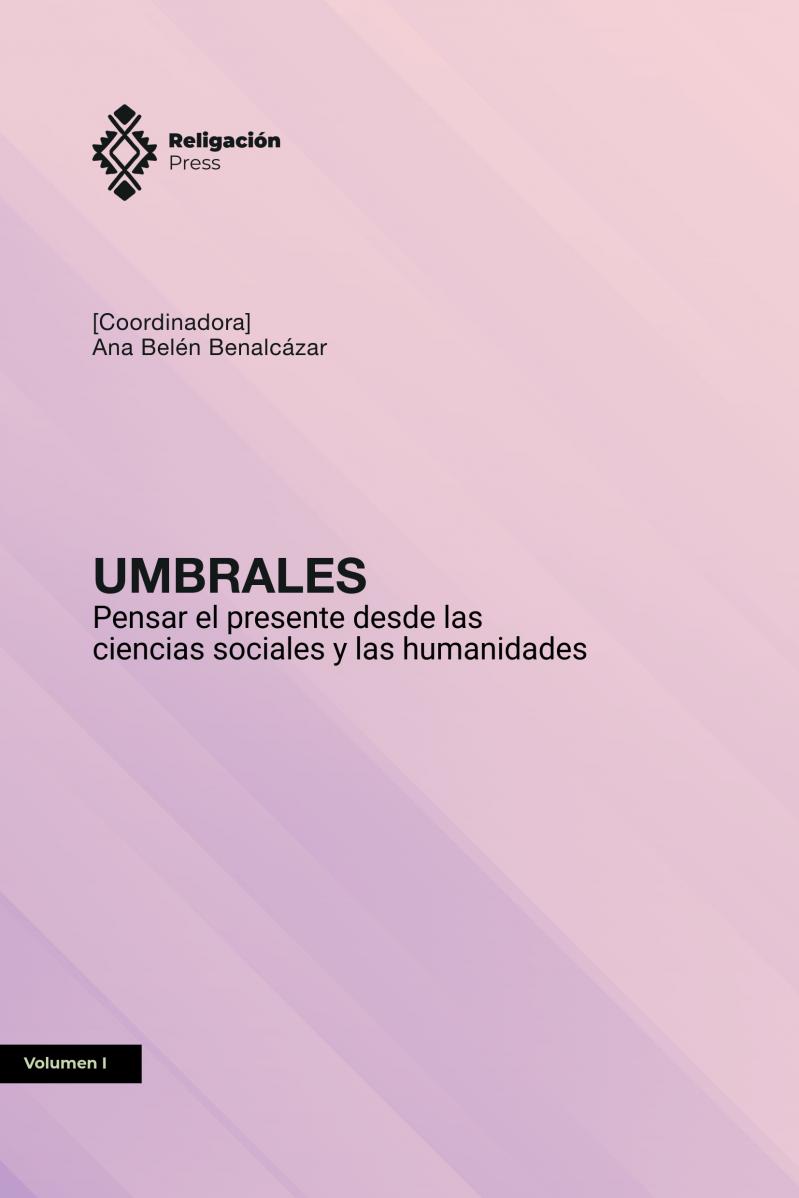
Thresholds: Thinking the Present from the Social Sciences and Humanities [Volume I]
Keywords:
transdisciplinarity, technology, justice, interculturality, organizationsSynopsis
This collective volume explores the thresholds of the present through a transdisci-plinary lens that articulates the social sciences, humanities, and public manage-ment. Throughout its pages, the tensions between technology, power, and con-temporary subjectivities are addressed. The chapters critically examine phenome-na such as the algorithmic management of work, e-government barriers, urban exclusion, and artificial intelligence in ethical deliberation. Furthermore, it delves into legal issues concerning access to justice and the reparation of harm, while vindicating interculturality, identity resistance, and inclusive education. The work integrates reflections on sustainability, labor dignification, and new organizational and forensic methodologies. Overall, this compilation invites a rethinking of nor-mative structures and institutional practices, offering a map of problems that de-mands comprehensive policies and solid ethical frameworks, consolidating itself as a starting point for academic debate and the construction of equitable societies.
Chapters
-
Introducción. Tensiones y desafíos para las ciencias sociales y las humanidades
-
Smart Cities and Social Exclusion: Urban Engineering as a Control Mechanism
-
Translation in the tension between the global and the local
-
Mexican Presidentialism during the PRI Regime: An Analysis of Its Influence on the Consolidation of the Mexican State
-
Recreational Public Space Infrastructure and Urban Quality of Life in Communities of Intermediate Cities in Latin America
-
Political, Institutional, and Technological Barriers to E-Government: A Review of the Gap Between Regulations and Citizen Participation in Latin America
-
When the Organization Becomes an Algorithm: Work Experience under Algorithmic Management
-
Access to Justice in Contexts of Inequality: Rethinking Criminal Procedural Rules for Guaranteeing Access to Justice in Mexico
-
Legal Criteria for Determining Compensation for Judicial Error in Cases of Pretrial Detention Followed by Acquittal in Santa, 2026
-
Centralidad del mapuzugun en la cultura mapuche
-
Critical Reading and Intellectual Autonomy: Transformative Practices in Higher Education
-
The Tiuque as a Metaphor of Displacement and Return in Trecaman, Antilef, and Saavedra
-
Beyond the Isolated Individual and the Biographical and Identity-Based Cultural Organization of Contemporary Subjective Experience
-
The Search for the Other as an Intercultural Premise: Disquisitions Based on Two Critical Texts
-
Teaching Mathematics for Social Justice: Challenges of an Inclusive Education
-
Ercilla, a Humanist in the Midst of Fire?
-
Mandatory Delivery of Information from Private Cameras in Police and Prosecutorial Investigations, Judicial District of Santa, 2026
-
Kanban as an Inventory Control Strategy: A Conceptual and Applied Review
-
Is engineering replacing ethical deliberation? Technology, power, and the automation of human decisions
-
Preventive Culture and Environmental Actions in Microenterprises in the City of Huaraz, 2025
-
Economic and Social Rights in the Industrial Corridor of Guanajuato: A Proposal for Inclusive Manufacturing Development in Irapuato
-
Beyond the Uniform Toward a Comprehensive Dignification of Municipal Police Work in Mexico
-
Community-Based Tourism (CBT) in the Maya Area of Quintana Roo Through a Systematic Review
-
From Absolute Space to Relational Space: A Transdisciplinary View to Understand Organizations
-
La huella victimaria relacional como matriz victimológico-conductual para la perfilación criminal de delitos híbridos de control coercitivo y violencia digital
Downloads
Download data is not yet available.
Published
September 22, 2026
Series
Copyright (c) 2026 Ana Belén Benalcázar; Humberto Andrés Álvarez Sepúlveda, Claudine Glenda Benoit Ríos, Javier Aguirre Ortiz, Julián Vargas Najera, Estela Patricia Silva Carranza, Luis Marcelo Olivos Jimenez, Elisa del Carmen García-Bautista, Iván Miranda-Vega, Jorge Uribe Piedrahíta, Cristian David Romero Martínez, Sidney Ernestina Marcos Escobar, Roberto Valles Celiz, Luis Fernando Costas Castillo, José Nestor Ferrer Trujillo, Isabel Cristina Mendoza Rodríguez, Juan Walther Ramírez Choque, Mariela Espinoza Vizquerra, Ricardo García Félix, Carmen Cecilia Espinoza Melo, Erich Leighton Vallejos, Ronald Floriano Rodríguez, Milagros Bellido Navarro, Jorge Roger Aranda Gonzalez, Jenny Elizabeth Vega Garcia De Chauca, Hitler Giovanni Ocupa Cabrera, Luis Elmer Angulo Cabanillas, Jesús Alberto Sánchez Valtierra, Alma Jazmín Carrera Morales, Anastacio Gustavo Fernández Rodríguez, Mirna Yasmin Pacheco Cocom, Sandra Tiempo Vázquez, Mónica Segovia Díaz, Augusto Renato Pérez Mayo, Nohemí Roque Nieto, Pablo Guerrero Sánchez, Alfredo García Anaya

Details about the available publication format: PDF
PDF
ISBN-13 (15)
978-9907-845-20-4
Publication date (01)
2026-09-22