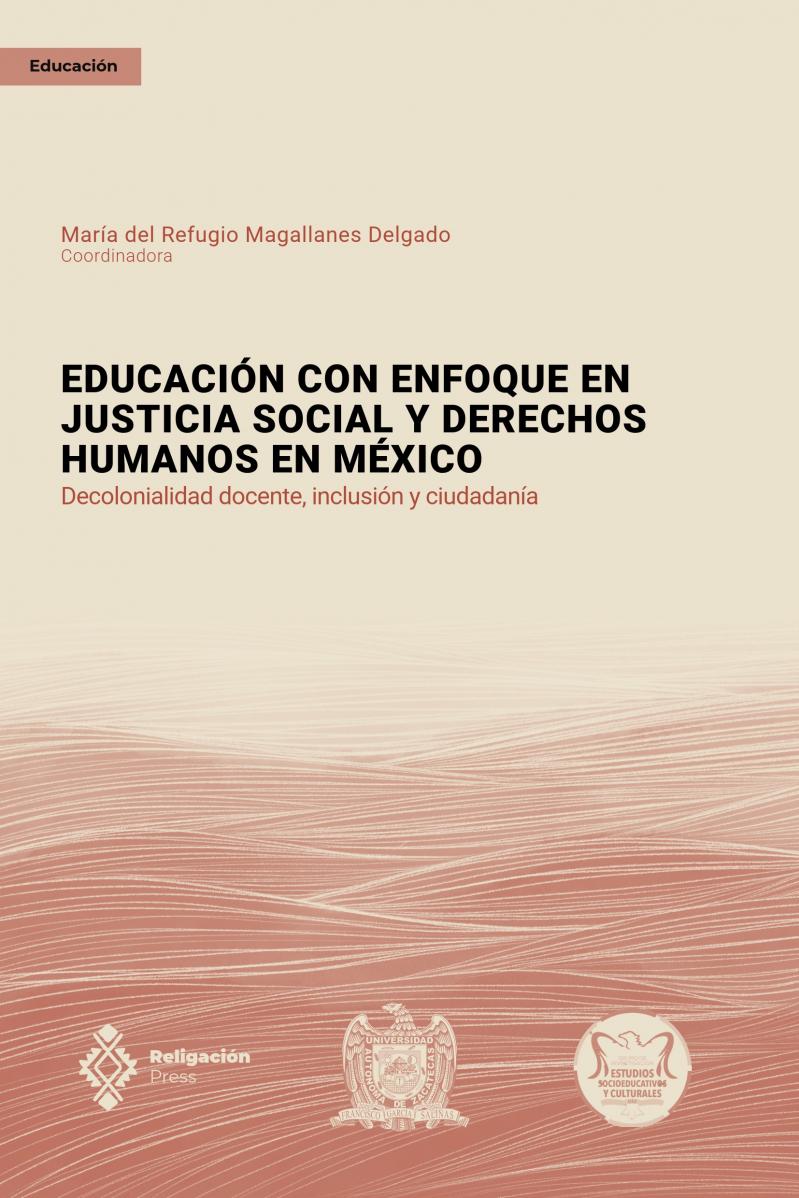
Education with a Focus on Social Justice and Human Rights in Mexico. Teacher Decoloniality, Inclusion, and Citizenship
Keywords:
Decoloniality, social justice, human rights, inclusive education, critical citizenshipSynopsis
This collective work analyzes the transformation of the Mexican educational system based on the incorporation of decolonial thought, driven by the 2019 reform. Through eight chapters, it examines three fundamental pillars: decolonial teaching, integral inclusion, and critical citizenship. The book addresses the shift in the teaching role toward an intellectual committed to social justice, the implementation of inclusive practices that redesign the system to make difference the norm, and the formation of critical citizenship through innovative pedagogical strategies. With a focus on the ecology of knowledges and epistemic justice, the work offers a situated analysis of the resistances, tensions, and possibilities that emerge in Mexican schools, teacher training colleges, and universities in the face of the challenge of building a truly transformative education.
Chapters
-
Idealization of Mexican Teachers as Cultural and Intellectual Agents in the 2022 Educational Model
-
Decoloniality as an Alternative for Gender Equality in the NEM: A Study in Sahuayo
-
Educational Dialogues from a Human Rights Perspective in higher education
-
Perceptions, Challenges, And Proposals To Mitigate Barriers Faced By Groups At Risk Of Exclusion In School Contexts
-
Rebuilding Paths: A Socio-Emotional Development Workshop for Institutionalized Adolescents from a Human Rights Approach
-
Tutoring Actions for the Care of a Student with ASD at UPN, Ajusco
-
Citizenship Education in Higher Education through Legislative Simulators: Between Participation and Institutional Reproduction
-
The Culture of Peace in University Teaching Experience: Practices, Meanings, and Tensions
Downloads
Download data is not yet available.
Published
July 20, 2026
Series
Copyright (c) 2026 María del Refugio Magallanes Delgado; Laura Rangel Bernal, Sylvia Catharina Van Dijk Kocherthaler, Anel González Ontiveros, Selso Loera Serrano, Jaime Flemate López, Javier Tinajero Raudry, Mireya Sarahí Abarca Cedeño, Jahel Cisneros Olivera, Julio Cuevas Romo, Alba Yanalte Álvarez Mejía, Cuauhtémoc Gerardo Pérez López, Claudia Negrete Urbano, Berenice Legorreta Rebollo, Adriana Guadarrama Chaparro, Vanessa Cárdenas Novoa

Details about the available publication format: PDF
PDF
ISBN-13 (15)
978-9942-594-87-7
Publication date (01)
2026-07-20