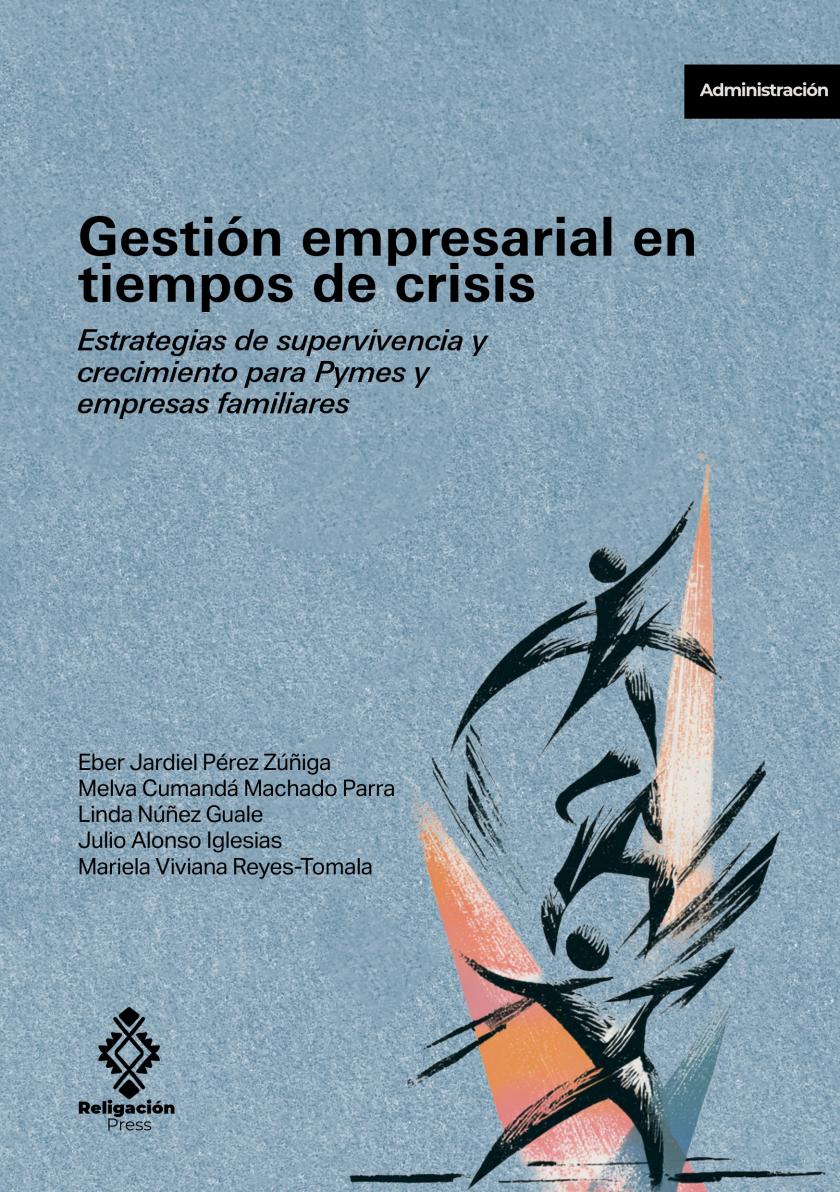
Gestão Empresarial em Tempos de Crise. Estratégias de Sobrevivência e Crescimento para MPMEs e Empresas Familiares
Palavras-chave:
MPMEs; empresas familiares; gestão empresarial; liderança; resiliênciaSinopse
O livro apresenta uma análise sobre a gestão de pequenas e médias empresas em contextos de instabilidade econômica, destacando os desafios enfrentados pelas MPMEs e empresas familiares quando o ambiente se torna incerto. Ao longo de seus capítulos, examinam-se fatores como a dependência do proprietário na tomada de decisões, a falta de planejamento estratégico, a limitada disponibilidade de recursos e os conflitos decorrentes da relação entre família, propriedade e empresa. Da mesma forma, abordam-se aspectos relacionados à liderança, à delegação de responsabilidades e à necessidade de adotar modelos de gestão mais organizados que permitam melhorar a eficiência e reduzir a vulnerabilidade empresarial. O livro também enfatiza a importância do planejamento flexível, da inovação, da adoção de tecnologias acessíveis e do desenvolvimento de capacidades de adaptação para enfrentar crises econômicas e mudanças no mercado. Finalmente, a obra propõe estratégias voltadas para fortalecer a resiliência organizacional, promover a profissionalização da gestão e construir empresas mais sustentáveis e preparadas para futuros cenários de incerteza.
Downloads
Não há dados estatísticos.
Referências
Ab Wahab, N., Ramdan, M., Zakaria, M., Abu, M., Hudin, N., & Kujat, C. (2025). Exploring the innovation factor: A systematic review of SME performance. TEM Journal, 14(3), 2134–2145. https://doi.org/10.18421/TEM143-20
Abdullah, A., Saraswat, S., & Talib, F. (2023). Impact of smart, green, resilient, and lean manufacturing system on SMEs’ performance: A data envelopment analysis (DEA) approach. Sustainability, 15(2). https://doi.org/10.3390/su15021379
Acosta, R., León, J., García, A., Fajardo, W., & Espinosa, L. (2022). Contemporary management practice applying the dynamic absorptive capacity measurement model (PM4AC) for improved business sustainability. Sustainability, 14(17). https://doi.org/10.3390/su141711036
Adam, N. A., & Alarifi, G. (2021). Innovation practices for survival of small and medium enterprises (SMEs) in the COVID-19 times: The role of external support. Journal of Innovation and Entrepreneurship, 10(1). https://doi.org/10.1186/s13731-021-00156-6
Adu, P., Zhang, J., Wauk, G., Nyantakyi, G., Amankwah, O., & Lassey, F. A. (2025). Exploring the mediation role of innovation in the nexus between knowledge-sharing and firm performance. Journal of Business and Industrial Marketing, 48(8), 1736–1757. https://doi.org/10.1108/JBIM-07-2023-0409
Al-Kfairy, M. (2025). Strategic integration of generative AI in organizational settings: Applications, challenges, and adoption requirements. IEEE Engineering Management Review, 53(6), 80–97. https://doi.org/10.1109/EMR.2025.3534034
Alam, M., Setiawan, B., Toiba, H., & Maulidah, S. (2025). From practices to sustainability: The role of sustainable supply chain management performance in SMEs. International Journal of Sustainable Development and Planning, 20(2), 781–791. https://doi.org/10.18280/ijsdp.200227
Alghamdi, O. (2023). Combination of decision logics for green innovations in Saudi Arabian based small and medium enterprises experience. Information Sciences Letters, 12(4), 1329–1342. https://doi.org/10.18576/isl/120447
Almeida, F. (2024). Causes of failure of open innovation practices in small- and medium-sized enterprises. Administrative Sciences, 14(3). https://doi.org/10.3390/admsci14030050
Alshibani, S., & Alshebami, A. (2025). From parents to progeny: Entrepreneurial self-efficacy, resilience, and family firm succession. Administrative Sciences, 15(11). https://doi.org/10.3390/admsci15110454
Amin, M., Gohar, M., & Ali, I. (2025). Impact of digital transformation on SME’s marketing performance: Role of social media and market turbulence. Discover Sustainability, 6(1). https://doi.org/10.1007/s43621-025-01228-3
Amuda, Y., & Alabdulrahman, S. (2024). Underlining factors of women and youths’ immersion in digital entrepreneurship and innovation for the growth of the economy in Nigeria. Journal of Infrastructure, Policy and Development, 8(2). https://doi.org/10.24294/jipd.v8i2.2913
Anastasios, V. (2025). Business model innovation and creativity impact on entrepreneurship development: An empirical study. Web Intelligence, 23(1), 98–111. https://doi.org/10.3233/WEB-230006
Annamalah, S., Paraman, P., Ahmed, S., Pertheban, T., Marimuthu, A., Venkatachalam, K., & Ramayah, T. (2025). Exploitation, exploration and ambidextrous strategies of SMEs in accelerating organisational effectiveness. Journal of Global Operations and Strategic Sourcing, 18(2), 182–223. https://doi.org/10.1108/JGOSS-08-2022-0090
Astner, H., & Gaddefors, J. (2025). Founders and their brands: How founder identity matters in small firm branding. Qualitative Market Research, 28(1), 101–121. https://doi.org/10.1108/QMR-06-2023-0085
Bani, A. (2025). Financial technology platforms and enhancing SME financing in Jordan. Discover Sustainability, 6(1). https://doi.org/10.1007/s43621-025-01345-z
Battaglia, D., & Neirotti, P. (2022). Dealing with the tensions between innovation and internationalization in SMEs: A dynamic capability view. Journal of Small Business Management, 60(2), 379–419. https://doi.org/10.1080/00472778.2020.1711635
Becheikh, N., & Bouaddi, M. (2025). Do strategic management, innovation and social capital matter for firm performance in developing countries? Evidence from Morocco, Tunisia and Egypt. International Journal of Emerging Markets, 20(10), 4054–4077. https://doi.org/10.1108/IJOEM-04-2023-0575
Bening, S., Dachyar, M., Pratama, N., Park, J., & Chang, Y. (2023). E-commerce technologies adoption strategy selection in Indonesian SMEs using the decision-makers, technological, organizational and environmental (DTOE) framework. Sustainability, 15(12). https://doi.org/10.3390/su15129361
Bhatti, M. A., Alyahya, M., Alshiha, A., Aldossary, M., Juhari, A., & Saat, S. (2022). SMEs’ sustainability and success performance: The role of green management practices, technology innovation, human capital and value proposition. International Journal of eBusiness and eGovernment Studies, 14(2), 112–125. https://doi.org/10.34109/ijebeg.202214127
Bischoff, T., Hipp, A., & Runst, P. (2023). Firm innovation and generalized trust as a regional resource. Research Policy, 52(8). https://doi.org/10.1016/j.respol.2023.104813
Boonlert, K., & Choi, M. (2025). Are the business strategies of Korean family firms innovation-oriented? Journal of Strategy and Management, 18(3), 677–700. https://doi.org/10.1108/JSMA-10-2023-0277
Brancati, E., Brancati, R., Guarascio, D., & Zanfei, A. (2022). Innovation drivers of external competitiveness in the great recession. Small Business Economics, 58(3), 1497–1516. https://doi.org/10.1007/s11187-021-00453-0
Bruce, E., Shurong, Z., Bankuoru, S., Amoah, J., Ying, D., Rui, H., & Lyu, T. (2022). Social media usage and SME firms’ sustainability: An introspective analysis from Ghana. Sustainability, 14(15). https://doi.org/10.3390/su14159433
Budiarto, D., & Nordin, N. (2024). Technology transformation, innovation, and digital economy development in developing countries: A systematic literature review. Journal of Telecommunications and the Digital Economy, 12(1), 148–171. https://doi.org/10.18080/jtde.v12n1.802
Cabaleiro, G., & Mendi, P. (2025). Exploration versus exploitation: The role of the business cycle. International Journal of Innovation Studies, 9(3), 203–217. https://doi.org/10.1016/j.ijis.2025.06.002
Caller, J., Lizarbe, M., González, E., & Condori, B. (2022). Organizational change in SMEs in Lima / Cambio organizacional en pymes de Lima. Revista Venezolana de Gerencia, 27(8), 914–925. https://doi.org/10.52080/rvgluz.27.8.12
Cano, J., Londoño, A., Castro, M., Paz, H., Rodas, C., & Arias, T. (2022). A bibliometric analysis and systematic review on e-marketplaces, open innovation, and sustainability. Sustainability, 14(9). https://doi.org/10.3390/su14095456
Cappellari, T., & Gucciardi, G. (2024). Equity investments and environmental pressure: The role of venture capital. Sustainability, 16(1). https://doi.org/10.3390/su16010241
Caragliu, A., Coletti, M., Landoni, P., & Sala, A. (2022). Why and how innovation vouchers work: Disentangling the roles of serendipity and funding. Journal of Urban Technology, 29(3), 159–182. https://doi.org/10.1080/10630732.2022.2035886
Carvache-Franco, O., Carvache-Franco, M., Gutiérrez-González, G., & Carvache-Franco, W. (2022). Incidence of technology and management in the innovation of Ecuadorian exporting SMEs / Incidencia de la tecnología y gestión en la innovación de las pymes exportadoras ecuatorianas. Revista de Ciencias Sociales, 28(2), 246–257. https://doi.org/10.31876/rcs.v28i2.37936
Castro, R., & Moreira, A. (2024). Unveiling paradoxes: Navigating SMEs readiness in the post-pandemic normality. Cogent Business & Management, 11(1). https://doi.org/10.1080/23311975.2024.2330114
Celetti, D. (2022). Territorial distribution of economic activities and resilience in Vicenza’s jewelry industry. R-Economy, 8(4), 384–395. https://doi.org/10.15826/recon.2022.8.4.029
Cervinka, T. (2023). Digital transformation of strategic management of SMEs in the Czech Republic. Journal of Information and Organizational Sciences, 47(2), 385–398. https://doi.org/10.31341/jios.47.2.8
Chairaksa, N., & Pankham, S. (2023). Modern entrepreneur for the success of online businesses for small and medium enterprise in Thailand. TEM Journal, 12(2), 956–966. https://doi.org/10.18421/TEM122-42
Chang, Y., Chiang, F., Hu, Q., & Hughes, M. (2025). From green HRM to SDG success: Pathways through exploratory innovation and developmental culture. Review of Managerial Science, 19(6), 1711–1741. https://doi.org/10.1007/s11846-024-00805-6
Chatzinikolaou, D., & Vlados, C. (2024). Crisis, innovation and change management: A blind spot for micro-firms? Journal of Entrepreneurship in Emerging Economies, 16(3), 698–719. https://doi.org/10.1108/JEEE-07-2022-0210
Chau, N., Deng, H., & Tay, R. (2024). SEM-neural network analysis for mobile commerce adoption in Vietnamese small and medium-sized enterprises. Journal of Asia Business Studies, 18(3), 826–849. https://doi.org/10.1108/JABS-08-2023-0337
Chiappini, R., Montmartin, B., Pommet, S., & Demaria, S. (2022). Can direct innovation subsidies relax SMEs’ financial constraints? Research Policy, 51(5). https://doi.org/10.1016/j.respol.2022.104493
Chioatto, E. (2025). What do circular innovator firms look like in Emilia-Romagna? A cluster analysis of firms innovating in the circular economy. Economia Politica, 42(2), 405–440. https://doi.org/10.1007/s40888-025-00367-0
Choi, J. (2024). The moderating effect of HRM on the relationship between environmental uncertainty and technological innovation of SMEs. Review of Integrative Business and Economics Research, 13(4), 300–311.
Chotisarn, N., & Phuthong, T. (2025). A bibliometric analysis insights into the intellectual dynamics of artificial intelligence for the micro, small, and medium enterprises. Cogent Business & Management, 12(1). https://doi.org/10.1080/23311975.2025.2491684
Clemente-Almendros, J., González-Torres, T., Cerdá-Suárez, L., & Seguí-Mas, E. (2025). Understanding the relevance of family business, gender and value chains for SMEs’ innovation in the context of COVID-19. International Journal of Entrepreneurial Behavior & Research, 31(2/3), 390–413. https://doi.org/10.1108/IJEBR-12-2021-1028
Contreras-Soto, A., López-Lemus, J., & Zalthen-Hernández, L. (2023). Scale to measure resilient capacities in Mexican SMEs / Escala para medir las capacidades resilientes en las pymes mexicanas. Revista Venezolana de Gerencia, 28(102), 872–887. https://doi.org/10.52080/rvgluz.28.102.26
Corazza, L., Cisi, M., & Falavigna, G. (2022). The enabling role of formalized corporate networks to drive small and medium-sized enterprises toward sustainability. Business Strategy and the Environment, 31(1), 545–558. https://doi.org/10.1002/bse.2909
Cortes-Ramirez, H., & Cuevas-Vargas, H. (2023). How absorptive capacity affects frugal innovation of SMEs in Mexico’s Bajío region / ¿Cómo la capacidad de absorción afecta la innovación frugal de las pymes en el Bajío mexicano? Revista Finanzas y Política Económica, 15(1), 105–133. https://doi.org/10.14718/revfinanzpolitecon.v15.n1.2023.5
Costa, J., & Barbosa, J. (2024). The role of family ownership on internationalization strategies. Administrative Sciences, 14(2). https://doi.org/10.3390/admsci14020029
Crocco, E., Broccardo, L., Alshaghdali, N., & Sharma, V. (2025). Green innovation as business strategy in small manufacturing businesses: Artificial intelligence and blockchain effects. Business Strategy and the Environment, 34(8), 10207–10219. https://doi.org/10.1002/bse.70114
Czarnitzki, D., & Giebel, M. (2025). Financial constraints for R&D and innovation: New evidence from a survey experiment. Applied Economics, 57(56), 9495–9515. https://doi.org/10.1080/00036846.2024.2421455
Dai, J., Gao, Q., Luo, R., Zhang, Y., & Yang, Y. (2024). Long-term-oriented values, governance model preferences, and dual innovation in family firms: The moderating role of slack resources. Journal of Global Information Management, 32(1), 1–19. https://doi.org/10.4018/JGIM.357730
Daimon, H., & Matsubara, Y. (2023). Impact of social norms on Japanese small businesses’ survival: Conflict management amid the COVID-19 pandemic. Journal of Integrated Disaster Risk Management, 13(2), 40–59. https://doi.org/10.5595/001c.91438
Damnjanovic, A. M., Dimitrijevic, V., Nešić, S., Miskic, M., Mrdak, G., & Arsić, S. M. (2023). Risk influence of employee productivity on business failure: Evidence found in Serbian SMEs. Sustainability, 15(6). https://doi.org/10.3390/su15064705
Damiyana, D., Maulina, E., Muftiadi, A., Auliana, L., & Kurniadi, K. (2024). The influence of innovation, knowledge management, and e-commerce adoption on MSME performance, and its impact on MSMEs sustainability. Journal of Infrastructure, Policy and Development, 8(11). https://doi.org/10.24294/jipd.v8i11.7994
Dasgupta, M. (2023). Open vs closed business model: Exploring its role in innovation in Indian small and medium enterprises (SMEs). Journal of the Knowledge Economy, 14(4), 4973–5002. https://doi.org/10.1007/s13132-022-01087-7
Dehaghi, M., Esfahani, A., & Hosseini, S. (2023). Tendency to innovate as the mediator of knowledge management and business performance. International Journal of Services and Operations Management, 44(4), 443–459. https://doi.org/10.1504/IJSOM.2023.130226
Demirkan, I., Srinivasan, R., & Nand, A. (2022). Innovation in SMEs: The role of employee training in German SMEs. Journal of Small Business and Enterprise Development, 29(3), 421–440. https://doi.org/10.1108/JSBED-07-2020-0246
Diharto, A., Madu, L., Auliya, Z., & Walyoto, S. (2024). Application of regional commodity-based innovation clusters to improve SMEs performance in regional superior products. Quality – Access to Success, 25(201), 322–330. https://doi.org/10.47750/QAS/25.201.35
Doan, H., Hoang, N., Tran-Nam, B., & Nguyen, N. (2022). Effects of tax administration corruption on innovation inputs and outputs: Evidence from small and medium sized enterprises in Vietnam. Empirical Economics, 62(4), 1773–1800. https://doi.org/10.1007/s00181-021-02072-w
Dressler, M. (2023). Generic strategic profiling of entrepreneurial SMEs – environmentalism as hygiene factor. International Entrepreneurship and Management Journal, 19(1), 121–150. https://doi.org/10.1007/s11365-022-00809-2
Duong, K., Dang, H., Tran, T., & Pham, H. (2024). How do financial constraints and market competition affect innovations: Evidence from Vietnam. Journal of Open Innovation: Technology, Market, and Complexity, 10(3). https://doi.org/10.1016/j.joitmc.2024.100321
Duppati, G., Scrimgeour, F., Chancharat, S., & Kijkasiwat, P. (2021). Ethnic diversity and financing choices affecting business survival: A case study of New Zealand small- and medium-sized enterprises. Journal of Economics, Finance and Administrative Science, 26(51), 160–174. https://doi.org/10.1108/JEFAS-11-2019-0270
Dwivedy, M., Pandit, D., & Khatter, K. (2025). Assessment of smart manufacturing readiness for small and medium enterprises in the Indian automotive sector. Sustainability, 17(18). https://doi.org/10.3390/su17188096
Dyduch, W., Chudziński, P., Cyfert, S., & Zastempowski, M. (2021). Dynamic capabilities, value creation and value capture: Evidence from SMEs under COVID-19 lockdown in Poland. PLoS ONE, 16(6). https://doi.org/10.1371/journal.pone.0252423
Edu, A. S., Ofosuhene, E., Agozie, D. Q., Gyamfi, B., & Simplice, A. (2025). Optimizing sustainable resource efficiency: A fuzzy-set qualitative comparative analysis of sustainable practices in SMEs. Business Strategy and the Environment, 34(3), 2799–2812. https://doi.org/10.1002/bse.4125
Elbanna, S., & Younis, H. S. M. (2025). Resilience rewritten: Ann’s journey from adversity to entrepreneurship. The CASE Journal, 21(3), 656–672. https://doi.org/10.1108/TCJ-03-2024-0075
Escobar, O., Schiavone, F., Khvatova, T., & Maâlaoui, A. (2023). Lead user innovation and entrepreneurship: Analyzing the current state of research. Journal of Small Business Management, 61(3), 1174–1191. https://doi.org/10.1080/00472778.2021.1955126
Estiri, M., Heidary-Dahoo, J., & Škare, M. (2022). COVID-19 crisis and resilience of tourism SMEs: A focus on policy responses. Economic Research-Ekonomska Istraživanja, 35(1), 5556–5580. https://doi.org/10.1080/1331677X.2022.2032245
Falciola, J., Mohan, S., Ramos, B., & Rollo, V. (2023). Drivers of SME resilience in Southeast Asia during COVID-19. Journal of Development Studies, 59(8), 1236–1257. https://doi.org/10.1080/00220388.2023.2219126
Fauji, D., Pratikto, H., Winarno, A., & Handayati, P. (2025). Collaborative resilience: Negotiation for adaptive strategies in supply chain partnerships. Review of Integrative Business and Economics Research, 14(1), 296–312.
Feitosa, P., & Mascarini, S. (2025). Evidence of COVID-19 lockdown stringency on SME survival in Brazil. Journal of Entrepreneurship and Public Policy, 14(2), 251–268. https://doi.org/10.1108/JEPP-02-2024-0024
Ferasso, M., Sulich, A., & Sztando, A. (2022). Knowledge creation process within high-tech SMEs in a context of industrial clusters: A cross-national comparison. International Journal of Entrepreneurship and Innovation Management, 26(5/6), 287–317. https://doi.org/10.1504/IJEIM.2021.10051312
Fernández, S., Nogueira, M., Rodeiro, D., & Rodríguez, M. (2023). Exports and firm growth: The moderating effect of innovation. European Journal of International Management, 21(4), 687–710. https://doi.org/10.1504/EJIM.2023.134640
Ferraro, S., Männasoo, K., & Tasane, H. (2023). How the EU cohesion policy targeted at R&D and innovation impacts the productivity, employment and exports of SMEs in Estonia. Evaluation and Program Planning, 97. https://doi.org/10.1016/j.evalprogplan.2022.102221
Figueiredo, R., & Bendelá, F. (2024). The role of equity crowdfunding in the Brazilian entrepreneurial ecosystem: An empirical analysis. Administrative Sciences, 14(9). https://doi.org/10.3390/admsci14090213
Flikkema, M., Castaldi, C., & de Man, A. P. (2025). On trademarks and innovation: A retrospective, 10 years later. Industry and Innovation, 32(9), 1081–1086. https://doi.org/10.1080/13662716.2025.2538842
Forhad, M. A. R., Ahsan, M. R., & Alam, G. M. (2022). Impact of introducing a customer services component during secondary school education to improve small and medium-sized enterprises: A case study in Bangladesh. Society and Business Review, 17(3), 337–353. https://doi.org/10.1108/SBR-07-2020-0097
Foti, L., Warwick, L., Lyons, E. M., Dhaliwal, S., & Alcorn, M. (2023). Knowledge transfer and innovation: Universities as catalysts for sustainable decision making in industry. Sustainability, 15(14). https://doi.org/10.3390/su151411175
Franco, M., Haase, H., & Rodini, A. (2023). The role of incubators in the internationalization process of incubated SMEs: A perspective of international cooperation. Global Business Review, 24(3), 488–509. https://doi.org/10.1177/0972150920919381
Freixanet, J., & Federo, R. (2022). The complex interplay of firm innovation, internationalization and learning capability in driving firm performance: A configurational analysis. Journal of Strategy and Management, 15(4), 766–790. https://doi.org/10.1108/JSMA-11-2021-0220
Fulgence, B., Hu, X., Larbi, O., Tuo, S., & Gnahe, F. (2023). Impact of knowledge absorptive capacity on innovative performance in SMEs: Mediating effect of cluster environment. Kybernetes, 52(12), 6001–6024. https://doi.org/10.1108/K-03-2022-0373
Gallardo-Velázquez, G., Fernández-López, S., Albeiro-Hernández, B., & Sandra-Espinosa, E. (2024). Charting the road to business internationalization / Trazando el camino hacia la internacionalización empresarial. Revista Venezolana de Gerencia, 29(108), 1758–1775. https://doi.org/10.52080/rvgluz.29.108.18
Gameti, D., & Morrish, S. (2025). Entrepreneurial orientation and SME growth: The mediating effect of product, process, and business model innovations. Journal of Research in Marketing and Entrepreneurship, 27(2), 232–254. https://doi.org/10.1108/JRME-02-2024-0035
Garrido-Miralles, M., Otero-González, L., López-Penabad, M., & Duran-Santomil, P. (2024). Does ESG implementation influence performance and risk in SMEs? Corporate Social Responsibility and Environmental Management, 31(5), 4227–4247. https://doi.org/10.1002/csr.2783
Gautam, D., & Gautam, P. (2024). Stress and resilience to migrant entrepreneur-managers of small and medium enterprises during COVID-19 pandemic. Benchmarking: An International Journal, 31(6), 2129–2150. https://doi.org/10.1108/BIJ-06-2022-0400
Georgieva, S., Vasilska, M., & Kolarov, K. (2023). The use of university research products in entrepreneurial practice: Specifics according to size class of enterprises and sectors of economic activities. Ikonomicheski Izsledvania, (8), 142–163.
Ghezzi, A., Cavallo, A., Sanasi, S., & Rangone, A. (2022). Opening up to startup collaborations: Open business models and value co-creation in SMEs. Competitiveness Review, 32(7), 40–61. https://doi.org/10.1108/CR-04-2020-0057
Ginesti, G., Ossorio, M., & Dawson, A. (2023). Family businesses and debt maturity structure: Focusing on family involvement in governance to explain heterogeneity. Journal of Family Business Strategy, 14(2). https://doi.org/10.1016/j.jfbs.2023.100563
Gómez, J., & Pérez, M. (2025). Transgenerational entrepreneurship and CSR in family businesses: A mediating pathway to financial performance. Journal of Family Business Management, 15(5), 1389–1419. https://doi.org/10.1108/JFBM-12-2024-0291
Gopi, V., & Saleeshya, P. G. (2025). A framework to assess the effectiveness index (EI) of the Indian SMEs to integrate lean and sustainability through combined fuzzy logic and systems approach. Benchmarking: An International Journal, 32(9), 3375–3407. https://doi.org/10.1108/BIJ-04-2024-0331
Guerrero, C., Torres, V., & Romero, R. (2025). Case study of the application of a methodology to adopt sustainability. International Journal of Sustainable Development and Planning, 20(4), 1583–1594. https://doi.org/10.18280/ijsdp.200420
Gupta, R., & Singh, B. (2024). Does access to finance and investment climate enhance small and medium enterprises (SMEs) innovation in India? Operations Research Forum, 5(4). https://doi.org/10.1007/s43069-024-00381-1
Ha, L., Doan, N., & Thanh, T. (2022). Effects of R&D, networking and leadership roles on environmental innovation adoption in Vietnam’s SMEs. Economic Research-Ekonomska Istraživanja, 35(1), 1211–1242. https://doi.org/10.1080/1331677X.2021.1962381
Hadi, D., Adi, P., Arintoko, A., & Ahmad, A. (2023). The impact of the Omnibus Law Cipta Kerja on the sustainability of MSMEs and economic growth by applying the business model canvas method and the use of financial technology, especially crowdfunding and microfinance. International Journal of Sustainable Development and Planning, 18(2), 505–513.
Halász, M., Sedliačiková, M., Dobrovič, J., Janáková, A., & Schmidtová, J. (2024). Internal barriers of family business: A survey in wood-working and furniture family enterprises in Slovakia before and during the COVID-19 pandemic. Journal of Ecohumanism, 3(6), 2075–2086. https://doi.org/10.62754/joe.v3i6.4161
Hänle, F., Weil, S., & Cambré, B. (2023). China’s OFDI support mechanisms in Germany: How governments can work together to promote SME internationalization, reduce liability of foreignness and contribute positively to society. Journal of Entrepreneurship in Emerging Economies, 15(6), 1534–1565. https://doi.org/10.1108/JEEE-08-2021-0327
Hassani, A., & Blais, C. (2024). Competitive intelligence as a creative tool for the innovation process: An exploratory study in SMEs. International Journal of Entrepreneurship and Innovation Management, 28(5/6), 363–364. https://doi.org/10.1504/IJEIM.2024.144577
Hernández-Maestro, N., & Oskam, J. (2025). A “new tourism cycle” on the Canary Islands: Scenarios for digital transformation and resilience of small and medium tourism enterprises. Journal of Tourism Futures, 11(1), 6–22. https://doi.org/10.1108/JTF-04-2022-0132
Hetharie, Y., Ikhwansyah, I., & Rahmawati, E. (2025). Legal empowerment of Indonesian micro, small and medium enterprises in the digital era: A comparison with China. Jurnal IUS Kajian Hukum dan Keadilan, 13(2), 326–345. https://doi.org/10.29303/ius.v13i2.1688
Hoang, H., Pham, T., & Tran, N. (2025). Determinants of green finance and SMEs performance: An empirical study in the Vietnamese agricultural sector. Research on World Agricultural Economy, 6(3), 529–547. https://doi.org/10.36956/rwae.v6i3.2031
Honglei, H., Khan, A., Shahzad, K., & Soomro, M. (2025). Empowering SMEs for sustainable development: The role of digital transformation and employee well-being. Sustainable Development, 33(1), 873–884. https://doi.org/10.1002/sd.70048
Hou, C., Chen, J., & Chen, B. (2025). A study on the effect of open innovation activities on digital transformation capability and firm performance: Evidence from Taiwanese SMEs. International Journal of Services and Operations Management, 50(4), 465–487. https://doi.org/10.1504/IJSOM.2025.145539
Huy, T. (2025). Determinants of intellectual capital in small and medium-sized enterprises: Evidence from Khanh Hoa Province, Vietnam. International Journal of Learning and Intellectual Capital, 22(4), 466–490. https://doi.org/10.1504/IJLIC.2025.151302
Ighomereho, O., Afolabi, T., Agada, S., & Ojo, A. (2022). Market and entrepreneurial orientations as predictors of small and medium enterprises’ performance in the COVID-19 era. Innovative Marketing, 18(2), 161–173. https://doi.org/10.21511/im.18(2).2022.14
Isa, M., Praswati, A., & Zulaekah, S. (2024). Vulnerability analysis: A tool for SMEs’ business resilience. Journal of Integrated Disaster Risk Management, 14(2), 157–175. https://doi.org/10.5595/001c.125616
Islam, A., Mohd-Noor, N., & Wahab, S. (2024). Rethinking survival, renewal, and growth strategies of SMEs in Bangladesh: The role of spiritual leadership in crisis situation. PSU Research Review, 8(1), 19–40. https://doi.org/10.1108/PRR-02-2021-0010
Islam, A., Wahab, S., & Tehseen, S. (2025). Rethinking holistic sustainable growth of Malaysian SMEs: A university helix-quadruple bottom line perspective. International Journal of Innovation Science, 17(6), 1443–1486. https://doi.org/10.1108/IJIS-07-2023-0158
Ismiyanti, F., Mahadwartha, P., Zunairoh, Z., & Ardiansyahmiraja, B. (2025). The resilience of micro, small and medium enterprises in Indonesia: COVID-19 perspective. International Journal of Entrepreneurship and Small Business, 54(2), 274–288. https://doi.org/10.1504/IJESB.2025.143828
Jamaludin, M., Kania, T., Yuniarti, Y., Martiawan, R., & Rustandi, I. (2026). Project-oriented supply chain and innovation strategies for competitive advantage: An empirical study of SMEs in West Java. Journal of Project Management, 11(1), 25–34. https://doi.org/10.5267/j.jpm.2025.11.005
Jeong, H., & Park, Y. (2025). Entrepreneurial orientation, technological innovation orientation, and management performance of SMEs in Korea: The role of absorption capacity. Global Business and Finance Review, 30(4), 27–39. https://doi.org/10.17549/gbfr.2025.30.4.27
Jocic, M., Morris, M., & Kuratko, D. (2023). Familiness and innovation outcomes in family firms: The mediating role of entrepreneurial orientation. Journal of Small Business Management, 61(4), 1345–1377. https://doi.org/10.1080/00472778.2020.1861284
Kabbara, D., Attieh, L., & Fatha, B. (2025). Entrepreneurship and resilience: Evidence from Lebanese SMEs. International Journal of Entrepreneurship and Small Business, 54(1), 130–151. https://doi.org/10.1504/IJESB.2025.142892
Kahveci, E., Avunduk, Z., Daim, T., & Zaim, S. (2025). The role of flexibility, digitalization, and crisis response strategy for SMEs: Case of COVID-19. Journal of Small Business Management, 63(3), 1198–1235. https://doi.org/10.1080/00472778.2024.2377671
Kara, A., & Li, J. (2025). Gender, ethnicity and SMEs’ access to finance: A systematic literature review of global empirical evidence. International Journal of Banking, Accounting and Finance, 15(1/2), 181–212. https://doi.org/10.1504/IJBAAF.2025.146519
Karatayev, D., Matyakubov, U., Mutaliyeva, L., Filimonau, V., & Ermolaev, V. (2024). Generation Alpha and family business: A perspective article. Journal of Family Business Management, 14(5), 884–890. https://doi.org/10.1108/JFBM-10-2023-0259
Kayani, F., & Alzaid, O. (2025). Small and medium-sized enterprises under the transformative Vision 2030 of Saudi Arabia. International Review of Management and Marketing, 15(3), 46–52. https://doi.org/10.32479/irmm.18797
Keen, C., Lescop, D., & Sanchez, V. (2025). Effect of entrepreneurial orientation on the international performance of small and medium-sized enterprises in emerging economies: The moderating role of resilience. Applied Economics Letters, 32(18), 2698–2702. https://doi.org/10.1080/13504851.2024.2337334
Khan, Z., Naz, F., Ahmad, M., & Battisti, E. (2025). Income-driven fintech adoption and its impact on innovation: Evidence from China. Business Process Management Journal, 31(5), 1862–1883. https://doi.org/10.1108/BPMJ-08-2024-0678
Khedr, N., Bary, A., Abokhashaba, M., & Sadek, H. (2024). The role of organizational culture in organization performance: A case study of an engineering consultancy SME operating in Egypt during COVID pandemic. Pakistan Journal of Life and Social Sciences, 22(2), 9322–9343. https://doi.org/10.57239/PJLSS-2024-22.2.00706
Kiani, A., Bullini-Orlandi, L., & Chen, Q. (2024). Greening the path to disruptive innovation: The roles of CEOs characteristics, green organizational identity, and green product competitiveness. Business Strategy and the Environment, 33(7), 6139–6155. https://doi.org/10.1002/bse.3799
Kim, H., & Hur, D. (2024). Feeling torn? The conflicting effects of market and entrepreneurial orientations on manufacturing SMEs’ innovation performance. European Journal of Innovation Management, 27(1), 233–262. https://doi.org/10.1108/EJIM-12-2021-0623
Kiman, K., & Yu, J. (2022). Linear or nonlinear? Investigation of the effect of public subsidies on SMEs R&D investment. Journal of the Knowledge Economy, 13(3), 2519–2546. https://doi.org/10.1007/s13132-021-00823-9
Kondala, M., Nudurupati, S., & Pappu, R. (2024). The challenges in adoption of circular economy in SMEs – a research agenda and way forward. Benchmarking: An International Journal, 31(5), 1667–1699. https://doi.org/10.1108/BIJ-04-2023-0272
Krankovits, M., Szombathelyi, K., Filep, C., & Szennay, Á. (2025). Family entrepreneurship and sustainability: Empirical analysis from Hungary. Central European Business Review, 14(5), 23–40. https://doi.org/10.18267/j.cebr.399
Kulykovets, O. (2024). Transforming industries: The digital revolution of Industry 4.0. Issues in Information Systems, 25(3), 148–164. https://doi.org/10.48009/3_iis_2024_112
Kussudyarsana, K., Maimun, M., Maulana, H., Nugroho, M., & Santoso, B. (2024). Family business resilience in crisis: Study case analysis in a collectivist society. Business: Theory and Practice, 25(1), 308–320. https://doi.org/10.3846/btp.2024.19633
Lafuente, E., Rabetino, R., & Leiva, J. (2025). Learning from success and failure: Implications for entrepreneurs, SMEs, and policy. Small Business Economics, 64(1), 1–10. https://doi.org/10.1007/s11187-024-00889-0
Lambrechts, F., Huybrechts, J., De Massis, A., & Lehmann, E. (2023). The “open family firm”: Openness as boundary work in family enterprises. Small Business Economics, 60(4), 1307–1322. https://doi.org/10.1007/s11187-022-00664-z
Larabi, C. (2026). Linking innovation capability, strategic orientation, and strategic renewal to sustainable performance: A dynamic capabilities perspective in Saudi SMEs. Business Strategy and the Environment, 35(1), 1255–1271. https://doi.org/10.1002/bse.70229
Lázár, E., & Madaras, S. (2024). ERP adoption of SMEs in Romania: An IT innovation step or a business transactional necessity? Acta Oeconomica, 74(4), 557–574. https://doi.org/10.1556/032.2024.00026
Leonelli, S., Masciarelli, F., & Fontana, F. (2022). The impact of personality traits and abilities on entrepreneurial orientation in SMEs. Journal of Small Business and Entrepreneurship, 34(3), 269–294. https://doi.org/10.1080/08276331.2019.1666339
Lim, S., & Jeong, S. (2025). Multi-founding family firms: Effects on firm governance, innovation, and performance. Entrepreneurship Theory and Practice, 49(2), 375–402. https://doi.org/10.1177/10422587241279945
Lopes, B., Coelho, A., & Neves, E. (2023). Greening the business: How ambidextrous companies succeed in green innovation through to sustainable development. Business Strategy and the Environment, 32(6), 3073–3087. https://doi.org/10.1002/bse.3287
Luong, T., Dang, C., & Tran, Q. N. (2024). Drivers of knowledge transfer for succession in family business: A perspective article. Journal of Family Business Management, 14(4), 813–822. https://doi.org/10.1108/JFBM-09-2023-0159
Maalouf, J., Miklian, J., & Hoelscher, K. (2025). Business survival strategies in a polycrisis: SME experiences from Beirut, Lebanon. Business Horizons, 68(4), 461–477. https://doi.org/10.1016/j.bushor.2025.03.002
Madaan, G., Singh, A., Mittal, A., & Shahare, P. (2024). Reduce, reuse, recycle: Circular economic principles, sustainability and entrepreneurship in developing ecosystems. Journal of Small Business and Enterprise Development, 31(6), 1041–1066. https://doi.org/10.1108/JSBED-01-2023-0009
Publicado
June 15, 2026
Séries
Copyright (c) 2026 Eber Jardiel Pérez Zúñiga, Melva Cumandá Machado Parra, Linda Núñez Guale, Julio Alonso Iglesias, Mariela Viviana Reyes-Tomala
Licença

Este trabalho está licenciado sob uma licença Creative Commons Attribution 4.0 International License.
Detalhes sobre o formato disponível para publicação: PDF
PDF
ISBN-13 (15)
978-9942-594-67-9
Publication date (01)
2026-06-15