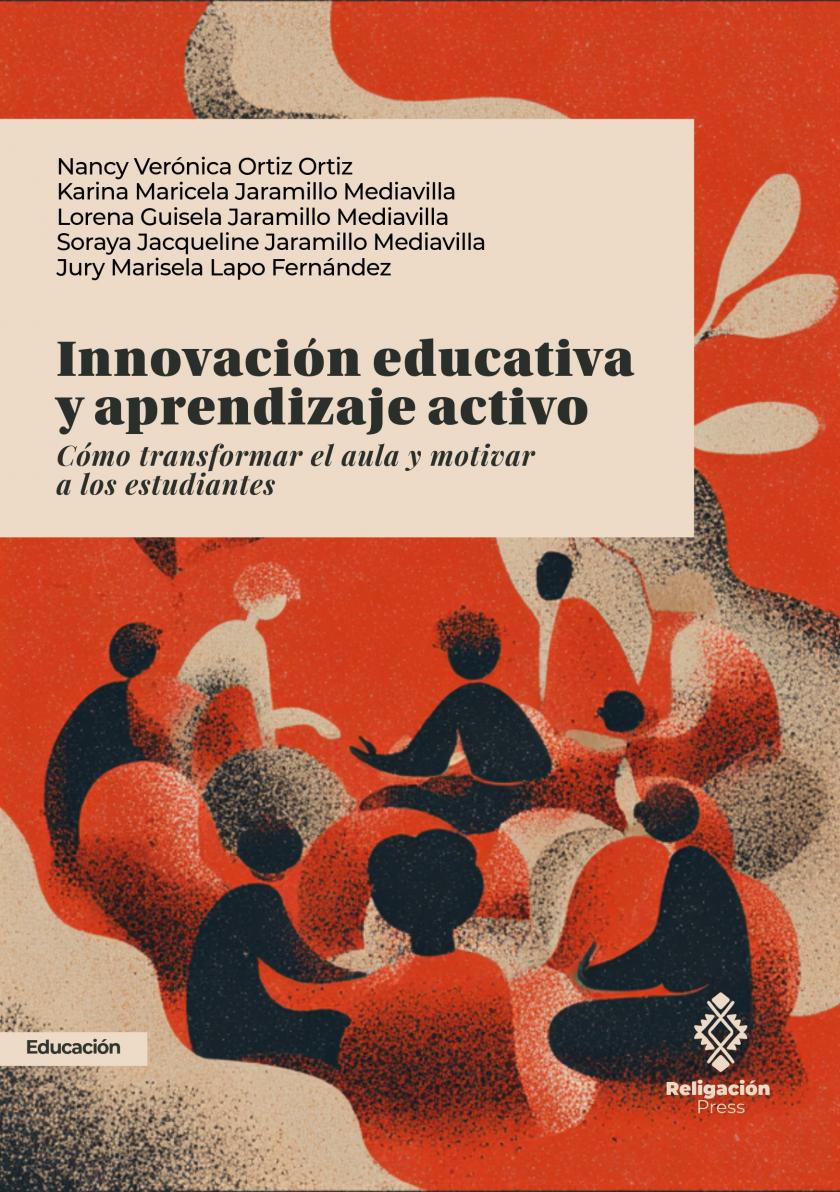
Inovação Educacional e Aprendizagem Ativa. Como Transformar a Sala de Aula e Motivar os Estudantes
Palavras-chave:
inovação educacional; aprendizagem ativa; motivação estudantil; avaliação formativa; aprendizagem significativa.Sinopse
O presente trabalho analisa a inovação educacional e a aprendizagem ativa como estratégias fundamentais para transformar a sala de aula e fortalecer a motivação estudantil nos contextos educacionais atuais. Ao longo de seus capítulos, examinam-se os fundamentos teóricos da aprendizagem ativa, destacando abordagens como o construtivismo, a aprendizagem significativa, a teoria experiencial e as contribuições da neuroeducação no processo de ensino-aprendizagem. Da mesma forma, abordam-se aspectos relacionados à motivação intrínseca e extrínseca, à aprendizagem centrada no estudante e ao papel do erro como parte do desenvolvimento acadêmico. Igualmente, estudam-se metodologias e estratégias que promovem a participação, a reflexão crítica e a construção do conhecimento por meio de experiências práticas e colaborativas. O trabalho também analisa a importância de transformar a avaliação tradicional em uma avaliação orientada à aprendizagem, considerando ferramentas como a avaliação formativa, as rubricas, a autoavaliação, a avaliação pelos pares e o feedback eficaz. Finalmente, destaca-se a necessidade de implementar modelos educacionais mais dinâmicos, inclusivos e participativos que permitam melhorar a qualidade da aprendizagem, desenvolver habilidades cognitivas e fortalecer a autonomia do estudante diante das demandas educacionais atuais.
Downloads
Não há dados estatísticos.
Referências
Abdallah, A. (2024). The impact of gender, psychology, and cultural dimensions on leadership development in distance education. Scientific Reports, 14(1). https://doi.org/10.1038/s41598-024-68495-4
Adeniran, O. T., Rahman, M. M., Owolabi, O. A., Shourabi, N. B., Sakk, E., Duru, C., Efe, F., Abiodun, P. O., & Ladeji-Osias, J. (2023). Preliminary experience and impact of experiment-focused teaching approach in a computer architecture course in computer science. ASEE Annual Conference and Exposition, Conference Proceedings.
Afshar, M., Zarei, A., Moghaddam, M., & Shoorei, H. (2024). Flipped and peer-assisted teaching: A new model in virtual anatomy education. BMC Medical Education, 24(1). https://doi.org/10.1186/s12909-024-05697-4
Agarwal, J., Singh, V., Singh, M. K., & Chacko, T. V. (2026). Helping students bridge their cognitive competence gap: Effectiveness of a faculty development workshop on “giving feedback”: A mixed methods study. The National Medical Journal of India, 39(2), 108–111. https://doi.org/10.25259/NMJI_720_2023
Al Abadi, H., Mainali, B., & Lumantarna, E. (2022). Teaching advancement with phased assessments and looped feedback (PALF) model. European Journal of Engineering Education, 47(6), 1229–1242. https://doi.org/10.1080/03043797.2022.2145937
Alam, L., Alam, M., Shafi, M., Khan, S., & Khan, Z. (2022). Meaningful in-training and end-of-training assessment: The need for implementing a continuous workplace-based formative assessment system in our training programs. Pakistan Journal of Medical Sciences, 38(5). https://doi.org/10.12669/pjms.38.5.5921
Alkabbany, I., Ali, A. M., Foreman, C., Tretter, T., Hindy, N., & Farag, A. (2023). An experimental platform for real-time students engagement measurements from video in STEM classrooms. Sensors, 23(3). https://doi.org/10.3390/s23031614
Alomar, A. (2022). A structured multimodal teaching approach enhancing musculoskeletal physical examination skills among undergraduate medical students. Medical Education Online, 27(1). https://doi.org/10.1080/10872981.2022.2114134
Al-Rawi, N., Al Kawas, S., Mohammed, M., Taha, W., & Hamdan, A. M. (2025). A novel team-based approach to oral diagnosis education: Case of the week. European Journal of Dental Education, 29(2), 277–284. https://doi.org/10.1111/eje.13068
Alrumi, N. (2023). The impact of COVID-19 on medical education and training. British Journal of Hospital Medicine, 20(5). https://doi.org/10.12968/hmed.2023.0462
Archila, P., Gravier, G., Levy, L., Ortiz, B., Rodríguez, A., Wilches, L., Truscott de Mejía, A., & Restrepo, S. (2022). Using formal and informal formative assessment to support bilingual argument mapping in university bilingual science courses. International Journal of Bilingual Education and Bilingualism, 25(9), 3420–3435. https://doi.org/10.1080/13670050.2022.2062218
Asiri, M. (2023). Potential benefits of enhancing motivation on English language learners’ performance. Arab World English Journal, 14(4), 325–341. https://doi.org/10.24093/awej/vol14no4.20
Azaiz, I., Deckarm, O., & Strickroth, S. (2023). AI-enhanced auto-correction of programming exercises: How effective is GPT-3.5? International Journal of Engineering Pedagogy, 13(8), 67–83. https://doi.org/10.3991/ijep.v13i8.45621
Balbi, A., Bonilla, M., Curione, K., Ibarra, A., & Menese, P. (2025). Impact of a professional development program in formative assessment for mathematics teachers. Professional Development in Education, 51(1), 7–22. https://doi.org/10.1080/19415257.2024.2433051
Barragán, S., & Aya, O. (2026). Enhancing critical thinking in university mathematics courses through project-based learning: A mapping review. European Journal of Science and Mathematics Education, 14(2), 283–294. https://doi.org/10.30935/scimath/18252
Baruah, B., & Ward, T. (2022). Facilitating engineering students’ creativity and teamwork ethos using smart learning platforms during COVID-19. 2022 20th International Conference on Information Technology Based Higher Education and Training (ITHET 2022). https://doi.org/10.1109/ITHET56107.2022.10031818
Battistella, P. E., Von Wangenheim, C. G., Von Wangenheim, A., & Martina, J. E. (2017). Design and large-scale evaluation of educational games for teaching sorting algorithms. Informatics in Education, 16(2), 141–164. https://doi.org/10.15388/infedu.2017.08
Bayazit, A., & Akçapinar, G. (2023). Design and development of an interactive video player for supporting formative assessment in online learning. Journal of Measurement and Evaluation in Education and Psychology, 14, 332–344. https://doi.org/10.21031/epod.1286077
Beane, R. J., Altermatt, E. R., Iverson, E. R., & Macdonald, R. H. (2020). Design and impact of the national workshop for early career geoscience faculty. Journal of Geoscience Education, 68(4), 345–359. https://doi.org/10.1080/10899995.2020.1722787
Bhatt, S., Verbert, K., & Noortgate, W. (2024). A method for developing process-based assessments for computational thinking tasks. Journal of Learning Analytics, 11(2), 157–173. https://doi.org/10.18608/jla.2024.8291
Bilodeau, K., Henriksen, C., Aloisio Alves, C., Torabi, P., Piché, L., Pepin, J., Lee, V., Vachon, M.-F., Folch, N., Pomey, M.-P., & Fernandez, N. (2025). Learning to live with and beyond hematological cancer: A narrative study for a comprehensive patient perspective. Seminars in Oncology Nursing, 41(5). https://doi.org/10.1016/j.soncn.2025.151952
Borrás-Gené, O., & Díez, R. M. (2025). Improving motivation in future teachers: Flipped classroom and gamification using digital badges. Journal of Information Technology Education: Innovations in Practice, 24. https://doi.org/10.28945/5634
Boudreau, J., & Anis, H. (2020). Effect of personality traits in team dynamics and project outcomes in engineering design. International Journal of Engineering Education, 36(B), 420–435.
Boumahdi, A., Ammari, F., & Ammari, M. (2026). An HCI-centered experiences of ICT integration and its impact on professional competencies supporting formative assessment in higher education e-learning. Multimodal Technologies and Interaction, 10(2). https://doi.org/10.3390/mti10020014
Brazeal, K. R., Brown, T. L., & Couch, B. A. (2016). Characterizing student perceptions of and buy-in toward common formative assessment techniques. CBE Life Sciences Education, 15(4). https://doi.org/10.1187/cbe.16-03-0133
Brinkman, N., Broekman, M., Teunis, T., Choi, S., Ring, D., & Jayakumar, P. (2025). A new measure of quantified social health is associated with levels of discomfort, capability, and mental and general health among patients seeking musculoskeletal specialty care. Clinical Orthopaedics and Related Research, 483(4), 647–663. https://doi.org/10.1097/CORR.0000000000003394
Camilleri, M. A., & Camilleri, A. C. (2017). Digital learning resources and ubiquitous technologies in education. Technology, Knowledge and Learning, *22*(1), 65–82. https://doi.org/10.1007/s10758-016-9287-7
Campbell, F., Hassoon, N., Jiwa, K., Ridsdill, J., Smith, A., Wilson, H., Jack, K., & Rogers, H. (2023). Co-creation to develop interventions to facilitate deep reflection for dental students. Perspectives on Medical Education, 12(1), 76–85. https://doi.org/10.5334/pme.16
Carey, N., Simonton, K., & Byra, M. T. (2023). Using a flipped classroom to improve student analysis and feedback to peers in the reciprocal style of teaching. Journal of Physical Education, Recreation and Dance, 94(7), 35–39. https://doi.org/10.1080/07303084.2023.2237551
Caussin, É., Qatramiz, A., Guillemot, C., Brukarz, Y., Loré, V., Jungo, S., Gouze, H., Le-Goff, S., Dursun, E., Attal, J.-P., & François, P. (2024). Creation and evaluation of an educational escape room for preclinical training on 3D printing in dentistry. European Journal of Dental Education, 28(3), 707–717. https://doi.org/10.1111/eje.12999
Chan, C. K. Y., & Fong, E. T. Y. (2018). Disciplinary differences and implications for the development of generic skills: A study of engineering and business students’ perceptions of generic skills. European Journal of Engineering Education, 43(6), 927–949.
Chen, Y., Ma, L., Pirzada, P., & Chai, K. K. (2025). Evaluating a guided personalised learning model in undergraduate engineering education: A data-driven approach to student-centred pedagogy. Education Sciences, 15(7). https://doi.org/10.3390/educsci15070925
Cheng, X., Yang, J., Jiang, Y., Liu, W., & Zhang, Y. (2022). Determinants of proactive low-carbon consumption behaviors: Insights from urban residents in eastern China. International Journal of Environmental Research and Public Health, 19(10). https://doi.org/10.3390/ijerph19106307
Chin, E. G., Schroers, G., Gonzalez, L., Hauser, L., Lazala, O., & Yi, Y. (2025). Post-exam wrappers: A tool for critical reflection. Journal of Nursing Education, 64(1), 48–51. https://doi.org/10.3928/01484834-20240417-01
Chun, S., Liang, C., Thomann, C., Amin, S., Trinh, C., Araujo, C., & Hassan, S. S. (2025). Art in anatomy session as a method of formative feedback in preclerkship medical education. Advances in Physiology Education, 49(1), 210–218. https://doi.org/10.1152/advan.00233.2024
Colacci, T., Bonavoglia, F., Dibattista, F., Gargaro, V., Taborri, S., & La Torre, G. (2025). Action maze and role playing in comparison: A randomized field trial on simulation-based teaching methodologies in critical care. Annali di Igiene, 37(6), 776–785. https://doi.org/10.7416/ai.2025.2698
Crestani, T. B., Tamborindeguy, M., Nunes, F. B., Kohek, M. B. F., & Branchini, G. (2025). Old habits die hard? How to challenge students and professors to rethink the teaching and learning processes in biophysics using escape room-based games. Advances in Physiology Education, 49(3), 817–823.
Da Costa, R., Pompeu, J., Moretto, E., Silva, J., Dos Santos, M., Nitrini, R., & Brucki, S. (2022). Two immersive virtual reality tasks for the assessment of spatial orientation in older adults with and without cognitive impairment: Concurrent validity, group comparison, and accuracy results. Journal of the International Neuropsychological Society, 28(5), 460–472. https://doi.org/10.1017/S1355617721000655
Daza, V., Gudmundsdottir, G., & Lund, A. (2024). The emergence of a digital third space: Opportunities and constraints of digital practice assessment in teacher education. International Journal of Educational Research, 127. https://doi.org/10.1016/j.ijer.2024.102415
DeMonbrun, M., Finelli, C. J., Prince, M., Borrego, M., Shekhar, P., Henderson, C., & Waters, C. (2017). Creating an instrument to measure student response to instructional practices. Journal of Engineering Education, 106(2), 273–298. https://doi.org/10.1002/jee.20162
Demetriou, A., Spanoudis, G., & Papadopoulos, T. C. (2025). The typical and atypical developing mind: A common model. Development and Psychopathology, 37(2), 1095–1107. https://doi.org/10.1017/S0954579424000944
Derakhshan, A., & Ghiasvand, F. (2022). Demystifying Iranian EFL teachers’ perceptions and practices of learning-oriented assessment (LOA): Challenges and prospects in focus. Language Testing in Asia, 12(1). https://doi.org/10.1186/s40468-022-00204-2
Ding, Y., Yue, S., Li, J., Wang, L., Gu, J., & Cui, Y. (2025). Investigating the effect of illness perception on motor function in cardioembolic stroke patients using the fear-avoidance model: The mediating role of kinesiophobia. Heart & Lung, 71, 39–46. https://doi.org/10.1016/j.hrtlng.2025.02.006
Dodin, Y., Dodein, R., Seetan, K., Alajjawe, S., Awwad, M., Adwan, M., Alhawari, A., Alkatari, A., Alqadasi, A. A., Alsheyab, G., & Obeidat, N. (2026). A survey study to assess stress and coping during medical education in a Jordanian university. Medicine, 105(7). https://doi.org/10.1097/MD.0000000000047495
Durrani, S. F., Hameed, A., Rani, P., Ahmed, S., Baqai, S., & Ali, R. (2025). Effect of Mini-CEX as formative learning tool for clinical skills in undergraduate medical students in a private medical university in Karachi, Pakistan. BMC Medical Education, 25(1). https://doi.org/10.1186/s12909-025-07962-6
Eddy, S. L., Brownell, S. E., Thummaphan, P., Lan, M.-C., & Wenderoth, M. P. (2015). Caution, student experience may vary: Social identities impact a student’s experience in peer discussions. CBE Life Sciences Education, 14(4). https://doi.org/10.1187/cbe.15-05-0108
Estriégana-Valdehita, R., Plata, R. B., & Medina-Merodio, J.-A. (2017). Educational technology in flipped course design. International Journal of Engineering Education, 33(4), 1199–1212.
Ewell, S., Cotner, S., Drake, A., Fagbodun, S., Robinson, L., Soneral, P., & Ballen, C. J. (2022). Eight recommendations to promote effective study habits for biology students enrolled in online courses. Journal of Microbiology and Biology Education, 23(1). https://doi.org/10.1128/jmbe.00260-21
Farooq, I., & Al-Jandan, B. A. (2015). Effect of video triggering during conventional lectures on final grades of dental students in an oral biology course: A two-year retrospective study. Journal of Dental Education, 79(12), 1467–1470. https://doi.org/10.1002/j.0022-0337.2015.79.12.tb06047.x
Fatawi, I., Nyoman Sudana Degeng, I., Setyosari, P., Ulfa, S., & Hirashima, T. (2020). Effect of online-based concept map on student engagement and learning outcome. International Journal of Distance Education Technologies, 18(3), 42–56. https://doi.org/10.4018/IJDET.2020070103
Fawaz, M., El-Malti, W., Alreshidi, S. M., & Kavuran, E. (2025). Exploring health sciences students’ perspectives on using generative artificial intelligence in higher education: A qualitative study. Nursing & Health Sciences, 27(1). https://doi.org/10.1111/nhs.70030
Fayadh, A. (2017). Effectiveness of the proposed training formative assessment programme and its impact on teaching style improvements of Saudi science teachers in Saudi Arabia. Journal of Turkish Science Education, 14(1), 35–56. https://doi.org/10.12973/tused.10189a
Feikaab, G. N., Bukari, F., & Oblie, E. (2025). Evaluating ESL classroom evaluation: Teacher–student beliefs and teacher practices in Sunyani East Municipality, Ghana. Discover Education, 4(1). https://doi.org/10.1007/s44217-025-00859-y
Garcia-Gonzalez, M., Caro-Felix, K. I., Bonilla-Ruelas, D. P., Cortes-Limon, A. M., Luque-Badillo, A. C., Salinas-Santander, M. A., Orozco-Nunnelly, D. A., Aguilar-Aleman, J. P., Charles-Niño, C. L., & Rios-Ibarra, C. P. (2025). A PBL strategy for incorporating 3D cell culture into the classrooms of undergraduate biotechnology engineering students. Research in Science and Technological Education, 43(4), 1167–1181. https://doi.org/10.1590/S1678-4634202551283209por
García-González, L., Abós, Á., Diloy-Peña, S., Gil-Arias, A., & Sevil-Serrano, J. (2020). Can a hybrid sport education/teaching games for understanding volleyball unit be more effective in less motivated students? An examination into a set of motivation-related variables. Sustainability (Switzerland), 12(15). https://doi.org/10.3390/su12156170
Gavens, N., Doignon-Camus, N., Chaillou, A.-C., Zeitler, A., & Popa-Roch, M. (2020). Effectiveness of mind mapping for learning in a real educational setting. Journal of Experimental Education, 90(1), 46–55. https://doi.org/10.1080/00220973.2020.1848765
Goldman, M., Rudd, A., Baum, S., Nagler, M., Weiss, D., Gross, I., & Auerbach, M. A. (2022). Formative assessments promote procedural learning and engagement for senior pediatric residents on rotation in the pediatric emergency department. MedEdPORTAL, 18. https://doi.org/10.15766/mep_2374-8265.11265
Hadgraft, R. G., & Kolmos, A. (2020). Emerging learning environments in engineering education. Australasian Journal of Engineering Education, 25(1), 3–16. https://doi.org/10.1080/22054952.2020.1713522
Hamzaoui, R., Ayachi, R., Jabir, B., Mohadab, M. E., & Bouikhalene, B. (2024). Digital assessment in training of future teachers: State of use and impact on trainee performance. International Journal on Technical and Physical Problems of Engineering, 16(2), 288–294.
Han, C., & Chen, S. (2024). Evaluating written versus audio feedback in formative assessment of consecutive interpreting: An exploratory qualitative investigation. FORUM, 22(2), 182–205. https://doi.org/10.1075/forum.23025.han
Han, C., Lu, X., & Fan, Q. (2025). Taming generative AI for interpreter education: Using large language models in classroom-based assessment of English-Chinese consecutive interpreting. Interpreter and Translator Trainer, 19(3–4), 444–464. https://doi.org/10.1080/1750399X.2025.2533606
Hashim, A. K., & Vongkulluksn, V. W. (2018). E-reader apps and reading engagement: A descriptive case study. Computers and Education, 125, 358–375. https://doi.org/10.1016/j.compedu.2018.06.021
Hsu, T.-Y., Chiou, C.-K., Tseng, J. C. R., & Hwang, G.-J. (2016). Development and evaluation of an active learning support system for context-aware ubiquitous learning. IEEE Transactions on Learning Technologies, 9(1), 37–45. https://doi.org/10.1109/TLT.2015.2439683
Jaramillo-Fierro, X., Guaya, D., Meneses, M. A., & Valarezo, E. (2026). Integrating generative artificial intelligence and augmented reality within a structured project-based learning framework for unit operations education. Sustainability (Switzerland), 18(5). https://doi.org/10.3390/su18052317
Jones, M. D., Guiton, G., Yost, C., Torr, C., Gong, J., & Parker, T. A. (2024). Structured debriefing to assess performance of entrustable professional activities. Journal of Graduate Medical Education, 16(5), 607–610. https://doi.org/10.4300/JGME-D-24-00247.1
Keung, C. C. W. (2024). Driving student engagement and motivation with the cloud-based flipped classroom model in BIM education. ACM International Conference Proceedings Series. https://doi.org/10.1145/3669947.3669949
Kordaki, M., & Gousiou, A. (2017). Digital card games in education: A ten year systematic review. Computers and Education, 109, 122–161. https://doi.org/10.1016/j.compedu.2017.02.011
Lai, C.-H., Lin, H.-W., Lin, R.-M., & Tho, P. D. (2019). Effect of peer interaction among online learning community on learning engagement and achievement. International Journal of Distance Education Technologies, 17(1), 66–77. https://doi.org/10.4018/IJDET.2019010105
Lanza, M., Abajas-Bustillo, R., Aparicio-Sanz, M., & Maté, C. (2025). A mixed methods study examining a socioemotional skills training program based on active learning methodologies in undergraduate nursing students. Nurse Education Today, 147. https://doi.org/10.11002/jdd.171073
Ludvigsen, K., Krumsvik, R., & Furnes, B. (2015). Creating formative feedback spaces in large lectures. Computers and Education, 88, 48–63. https://doi.org/10.1016/j.compedu.2015.04.002
Maceiras, R., Cancela, A., Sánchez, A., & Urréjola, S. (2020). B-learning tools in engineering education. International Journal of Emerging Technologies in Learning, 3(2), 36–40. https://doi.org/10.3991/ijep.v3i2.2451
Matsuyama, Y., Nakaya, M., Okazaki, H., Lebowitz, A. J., Leppink, J., & Van Der Vleuten, C. (2019). Does changing from a teacher-centered to a learner-centered context promote self-regulated learning: A qualitative study in a Japanese undergraduate setting. BMC Medical Education, 19(1). https://doi.org/10.1186/s12909-019-1550-x
Narasareddygari, M. R., Ramasamy, V., Cilone, D., & Ali, M. (2025). Enhancing computer science education using learning assistants: A gamification approach. ACMSE–Proceedings of the ACM Southeast Conference. https://doi.org/10.1145/3696673.3723075
Nasrullah, A., Marlina, M., & Dwiyanti, W. (2018). Development of student worksheet-based college e-learning through Edmodo to maximize the results of learning and motivation in economic mathematics learning. International Journal of Emerging Technologies in Learning, 13(12), 211–229. https://doi.org/10.3991/ijet.v13i12.8636
Navazesh, M., Chen, X., Schilperoort, H., Bautista, S., & Eisenberg, L. (2025). A 13-year review of triple jump examination at the Ostrow School of Dentistry of the University of Southern California. Journal of Dental Education, 89(6), 870–878. https://doi.org/10.11002/jdd.1371071
Owens, D. C., Petitt, D. N., Lally, D., & Forbes, C. T. (2020). Cultivating water literacy in STEM education: Undergraduates’ socio-scientific reasoning about socio-hydrologic issues. Water (Switzerland), 12(10). https://doi.org/10.3390/w12102857
Perez-Poch, A., Sánchez-Carracedo, F., Salán, N., & López, D. (2019). Cooperative learning and embedded active learning methodologies for improving students’ motivation and academic results. International Journal of Engineering Education, 35(6), 1851–1858.
Quinn, B. (2016). Engaging nursing students in an edible pharmacological concepts lesson: Cookies in the curriculum. Nurse Educator, 41(6), 286–287. https://doi.org/10.1097/NNE.0000000000000302
Rajendra Prasad, C., Samala, S., & Yalabaka, S. (2025). A case study: Implementation of active learning and problem-based learning pedagogies in freshman undergraduate course. Journal of Engineering Education Transformations, 39(1), 213–220. https://doi.org/10.16920/jeet/2025/v39i1/25126
Rastogi, S., Sharma, A., & Panse, C. P. (2019). Changing facets of higher education in management: A students’ perspective. International Journal of Educational Management, 33(6), 1235–1254. https://doi.org/10.1108/IJEM-07-2018-0196
Richardson, L. A., Elmer, S. J., Knecht, S. K., Kerrigan, D. J., Sherman, M. M., & Griffith, G. J. (2026). A pedagogical initiative promoting Exercise Is Medicine® for cancer prevention and supportive care. Advances in Physiology Education, 50(1), 216–222. https://doi.org/10.1152/advan.00187.2025
Rodić-Trmčić, B., Labus, A., Barać, D., Popović, S., & Radenković, B. (2018). Designing a course for smart healthcare engineering education. Computer Applications in Engineering Education, 26(3), 484–499. https://doi.org/10.1002/cae.21901
Rutherford, C., Ajmera, B., Poplin, A., Emery, A., Sabrowsky, J. W., & Chung, P. (2025). Impact of game design-based learning on student engagement, achievement, and motivation in undergraduate geotechnical engineering classes. En M. S. Beauregard, & A. S. Budge, (eds.). Geotechnical Special Publication (pp. 69–78). American Society of Civil Engineers. https://doi.org/10.1061/9780784486009.008
Sánchez-Redroban, J. D., & Romero-Duran, M. V. (2025). A comprehensive framework for integrating modern educational technologies with problem-based learning in medical education. Discover Education, 4(1).
Sandra, R., Firman, F., Razak, A., & Handrianto, C. (2025). A novel problem-based learning model incorporating team teaching to enhance self-determination in nursing students: Development and validation. Pedagogika, 157(1), 45–72. https://doi.org/10.15823/p.2025.157.3
Shortlidge, E. E., Rain-Griffith, L., Shelby, C., Shusterman, G. P., & Barbera, J. (2019). Despite similar perceptions and attitudes, postbaccalaureate students outperform in introductory biology and chemistry courses. CBE Life Sciences Education, 18(1). https://doi.org/10.1187/cbe.17-12-0289
Starr, C. R., Hunter, L., Dunkin, R., Honig, S., Palomino, R., & Leaper, C. (2020). Engaging in science practices in classrooms predicts increases in undergraduates’ STEM motivation, identity, and achievement: A short-term longitudinal study. Journal of Research in Science Teaching, 57(7), 1093–1118. https://doi.org/10.1002/tea.21623
Sugahara, S., & Dellaportas, S. (2018). Bringing active learning into the accounting classroom. Meditari Accountancy Research, 26(4), 576–597. https://doi.org/10.1108/MEDAR-01-2017-0109
Urquidi-Martín, A. C., Tamarit-Aznar, C., & Sánchez-García, J. (2019). Determinants of the effectiveness of using renewable resource management-based simulations in the development of critical thinking: An application of the experiential learning theory. Sustainability (Switzerland), 11(19). https://doi.org/10.3390/su11195469
Vergara, C., Navarrete, K., & Nikulin, C. (2025). From classroom to laboratory: How classroom ideas become prototypes that inspire the metamotivational learning experience. En M. M. Larrondo Petrie, J. Texier, & R. A. Rivas Matta, (eds.). Proceedings of the LACCEI International Multi-Conference for Engineering, Education and Technology. Latin American and Caribbean Consortium of Engineering Institutions. https://doi.org/10.18687/LEIRD2025.1.1.119
Wang, M., & Bohn, D. M. (2018). Charging to the end: Course activities for semester-long student engagement in an undergraduate product development capstone course. Journal of Food Science Education, 17(3), 85–93. https://doi.org/10.1111/1541-4329.12138
Wong, F., Lau, L., & Cheng, K. (2026). A comprehensive pedagogical strategy to cultivate clinical reasoning and problem-solving skills in nursing education. Nurse Education in Practice, 92. https://doi.org/10.1080/10401334.2025.2481400
Zahay, D., Kumar, A., & Trimble, C. (2017). Motivation and active learning to improve student performance: An extended abstract. En Developments in Marketing Science: Proceedings of the Academy of Marketing Science (pp. 1259–1263). https://doi.org/10.1007/978-3-319-45596-9_231
Publicado
May 18, 2026
Séries
Copyright (c) 2026 Nancy Verónica Ortiz Ortiz, Karina Maricela Jaramillo Mediavilla, Lorena Guisela Jaramillo Mediavilla, Soraya Jacqueline Jaramillo Mediavilla, Jury Marisela Lapo Fernández
Licença

Este trabalho está licenciado sob uma licença Creative Commons Attribution 4.0 International License.
Detalhes sobre o formato disponível para publicação: PDF
PDF
ISBN-13 (15)
978-9942-594-56-3
Publication date (01)
2026-05-18